Photo manipulation is nothing new, and for anyone growing up in the digital age, Photoshop has morphed from a proprietary digital editing program into a verb. Taking it a step further, Google Pixel’s Magic Editor puts Photoshopping right into the palm of your hand. The smartphone app allows you to move, resize, or even delete items from an image. Not happy with what your camera captures in the first place? Canva, Dall-E, Firefly, and other software lets you conjure up any image you can verbalize. Don’t feel encumbered by your lack or experience or, for that matter, reality. We used to say, “It’s only true if there’s pictures.” That’s certainly not the case any more. But was it ever?
In the commercial and theatrical world, professional filmmakers intentionally alter reality. They use all kinds of tricks to make things intimidating, pretty, ugly, or endearing. Makeup, costumes, and lighting turn a perfectly charming Emilia Clarke into the Mother of Dragons.


But these tricks are still in play even if you don’t use them intentionally. Here are two pictures of a friend of mine at a mud run.


In the first, you can clearly see the falling rain. (No, those aren’t orbs…) In the second, you can see that it is still raining if you look at the water. But the change of angle and focal length means you can no longer see the falling rain. (This is the same reason why it sometimes looks like it’s barely sprinkling at rained out sporting events.) I didn’t hide the rain intentionally, but that’s the reality of the situation.
The important thing to remember is, consciously or not, all media is an interpretation of reality. When you’re on vacation and take a picture, it captures some part of the moment, but it isn’t a recreation of the moment. You’re limited by the abilities of your camera. You choose to photograph the Grand Canyon not the parking lot next to the Grand Canyon. You crop out the guy wearing that ridiculous Hawaiian shirt. And what about the people in your photo? Are they like my nephew, who for two years refused to smile any time someone pointed a camera at him? Or do they ham it up for the camera in the hopes of becoming an internet star?
This is nothing new. Film has been an interpretive art since its inception. Below are two of the earliest war photographs ever taken. These are from the Crimean War in 1855, twenty-three years before the first movie was made.
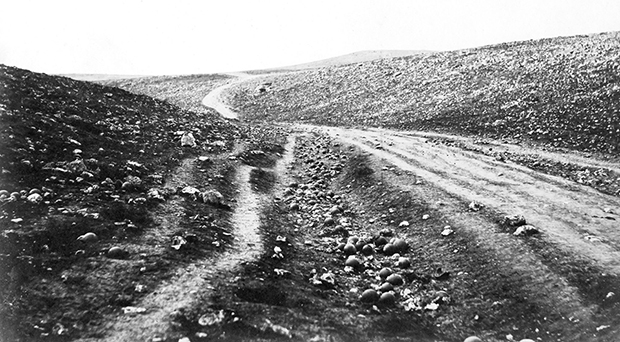
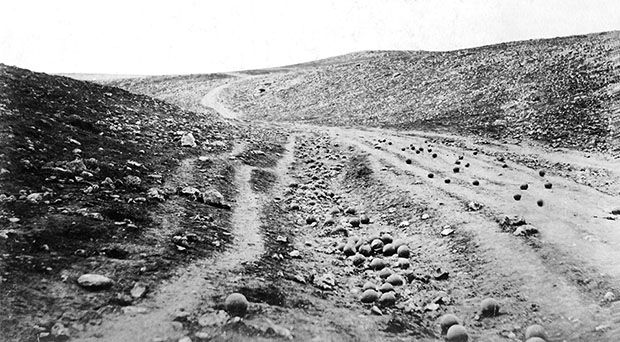
Both show a scene of desolation strewn with cannonballs. But it’s the second one that would make photographer Roger Fenton famous. Simply put, it’s a more striking photograph. Fenton wanted to show the horror and destruction of war, but he was restricted by his cumbersome film equipment. His solution? Move the cannonballs onto the road to take advantage of the high contrast. Although it was much more labor intensive than Photoshop, it’s the same basic principle. He altered his photo for effect. He sought a deeper “Truth” that wasn’t reflected in “reality.”
In the late 1920s, surrealist painter Rene Magritte created this thoughtful painting called “The Treachery of Images.”
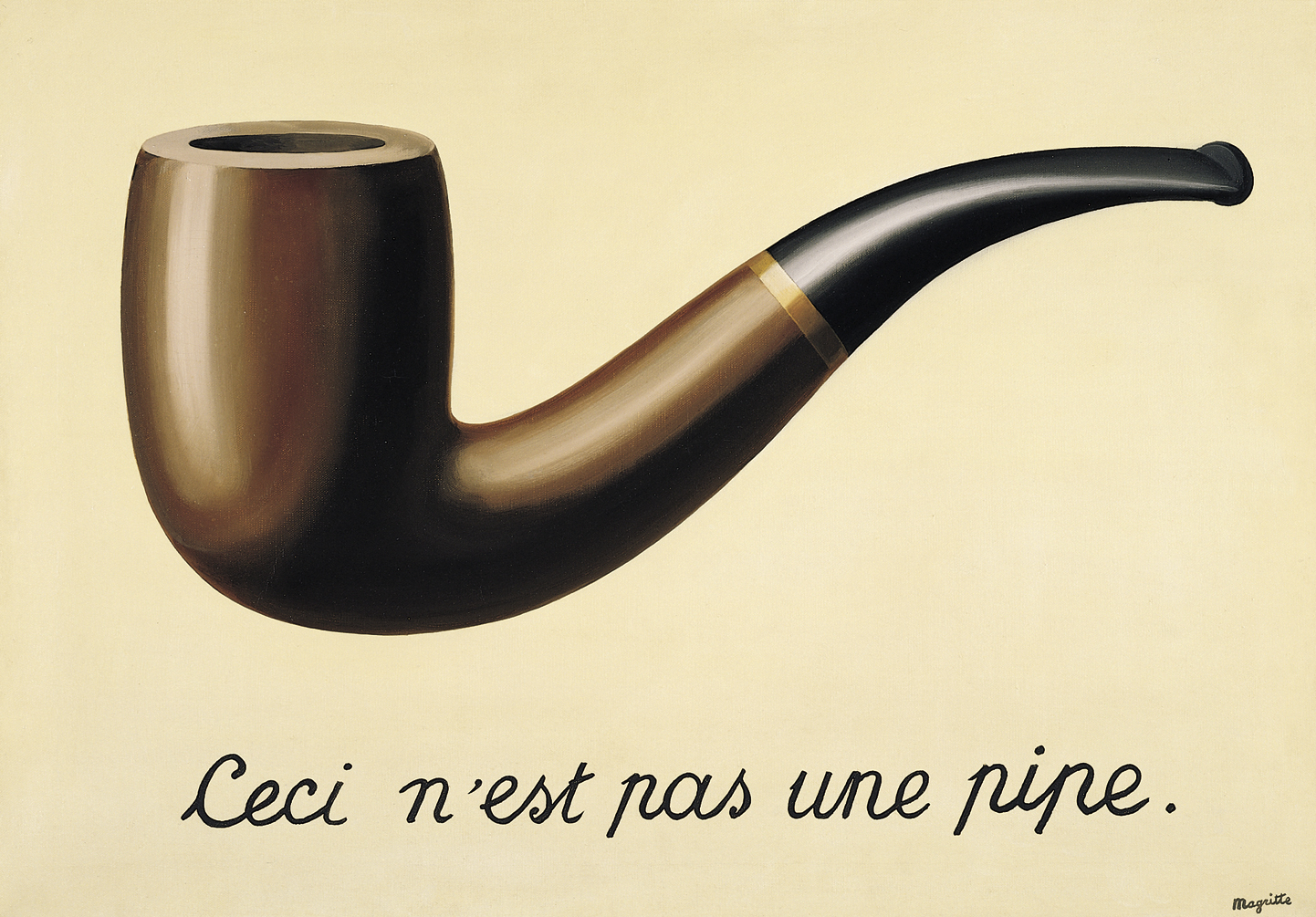
If you don’t know French, the text reads, “This is not a pipe.” Of course it’s not a pipe. It’s a painting. It represents a pipe. Our brains conceive of it as a pipe, but it is not a pipe. The same holds true for all media.
A definition might be helpful here. Media is the plural of medium. The two definitions that come to mind are medium (size), as in the size between small and large and medium (fortune teller), as in someone who communicates between the living and the dead. Both contemporary definitions share the same Latin route, medias, which simply means middle. It shouldn’t surprise you that our news sources are generally referred to as “the media.” They are the middlemen. They transport ideas from the source to us. But along the way, they must interpret it.
Media is also used in the art world to describe the material that an artist uses. You may see the phrase “mixed media on canvas.” This medium might be oil paint, latex paint, clay, canvas, silk, steel, analog audio recording, digital video recording, computer programs, or even food. The point is, the artist interprets the world through this medium. Film, as an artistic endeavor, is its own medium. But never forget that the six o’clock news, the news radio traffic report, and the Wall Street Journal all operate in artistic mediums. To explain in more detail, I’d recommend listening to Malcolm Galdwell’s Revisionist History podcast from a 2017.
In it, he discusses this famous photograph from Birmingham in 1963.
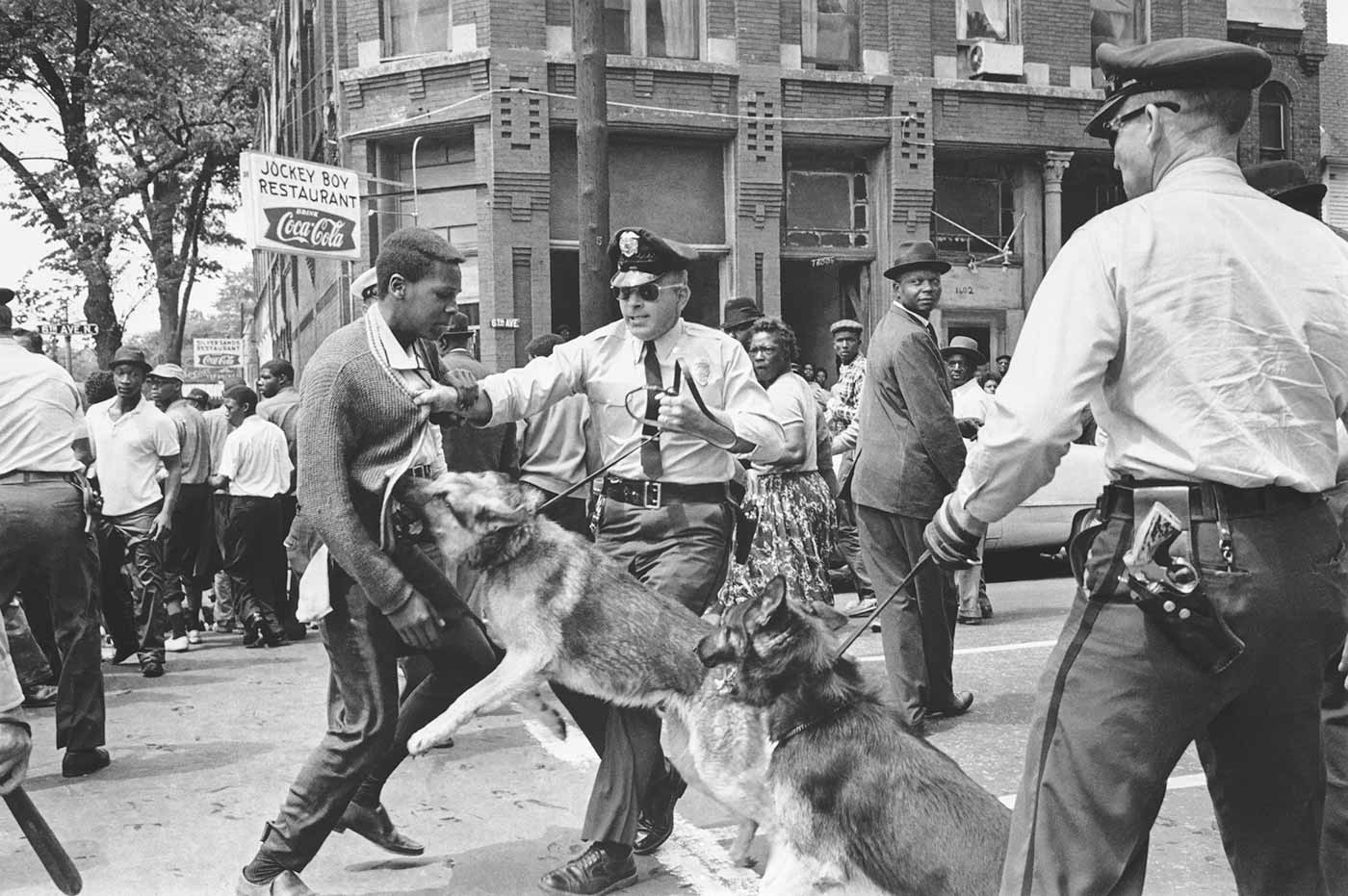
It seems to show a police officer unleashing his dog on a black protester. But it doesn’t. The man in the photograph wasn’t part of the protest. He wasn’t a “Foot soldier,” as the Civil Rights activists called themselves. And the police officer hadn’t unleashed his dog on him. If you look closely, both men seem surprised and the police officer is leaning back, trying to pull the dog away. But that’s not what the nation saw.
This photo highlighted the brutality of the Jim Crowe south. It represented the discrimination, the institutionalized hate, and the lynchings. It shifted public opinion to the side of the Civil Rights movement, and it was all done on purpose. Bill Hudson, the photographer, chose this picture over the hundreds of other photos he had taken that day. The editor of The New York Times chose to put this story above the fold rather than any other news of the day. This is what a medium does. It takes the raw data, curates it, interprets it, and disseminates a cohesive message. In doing so, a medium must disregard data that fails to support its message or obfuscate its position. In its quest for “Truth,” it must necessarily deviate from “reality.”
To further clarify, look at Ronald S. McDowell’s statue inspired by Bill Hudson’s photograph.
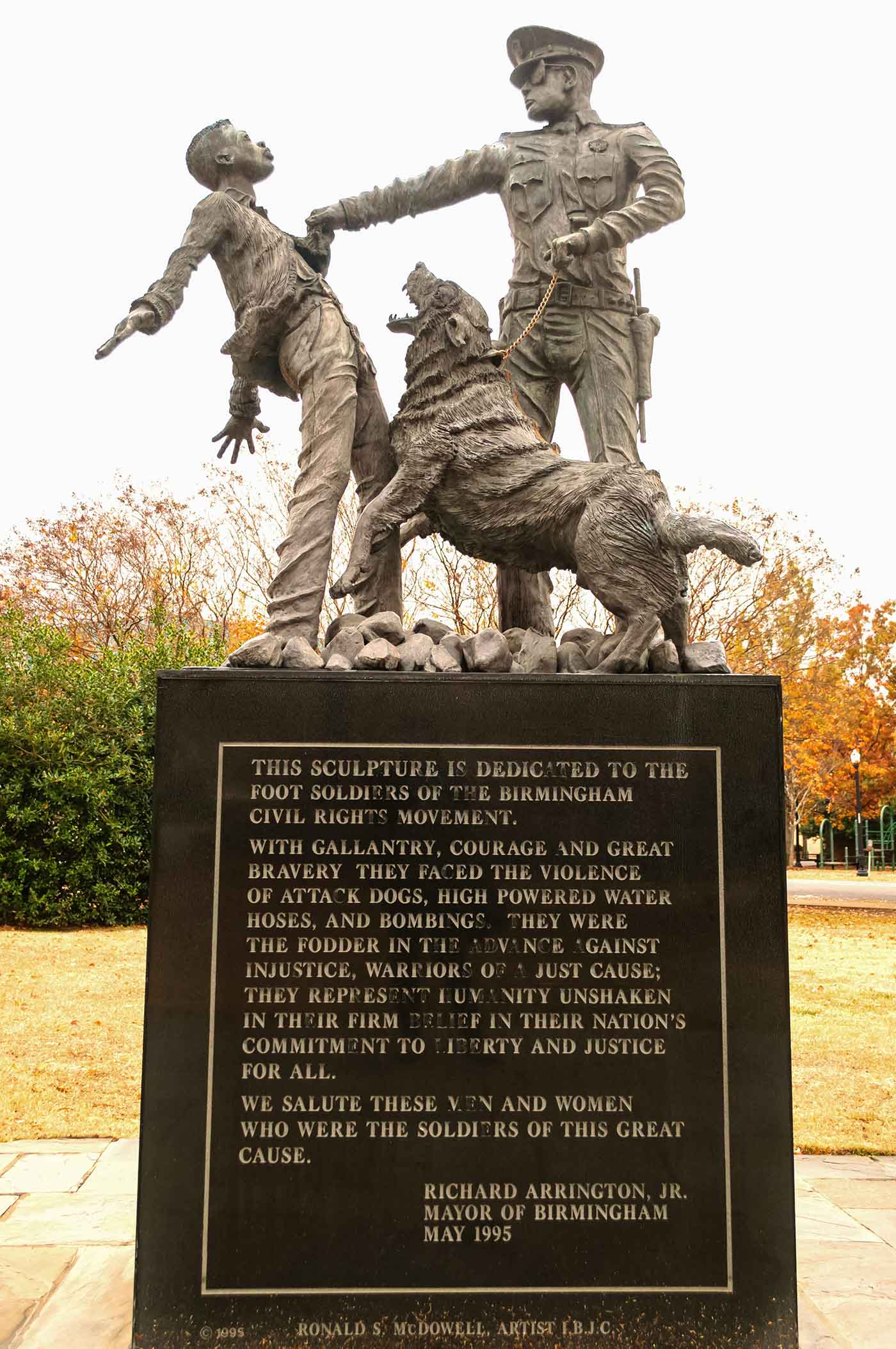
The figure representing Walter Gadsen, the student, is considerably younger and shorter than he was in reality. The police officer is emotionless and inhuman, reminiscent of T-1000 from Terminator 2: Judgment Day, which came out four years before the sculpture was dedicated. The police dog’s mouth is wide open, bearing vicious, anatomically improbable fangs. But remember this is a piece of art. This is not a pipe.
The push and pull between film as art and film as documentation will never end. But as a filmmaker and consumer of media, it’s important to acknowledge that film is a medium. It is not reality. There is no magic bullet, no enforceable code of conduct, no ten commandments of filmmaking that will ever make film purely objective. Reality is reality. Film is film. The best thing you can do as both a filmmaker and a consumer is educate yourself.
It’s important to learn about technology, to learn what is possible and how to spot a fake. But it’s also important to learn about art. You know—art, that thing that gets cut when we want to tighten school budgets. Learn about artistic conventions. Learn to read the meaning behind how a frame is composed, how set decoration reinforces the theme, and how story arcs are constructed. Understand that models and movie stars are just people, too. Play with AI. Appreciate the complex and tragic story of Aaron Copland and Fanfare for the Common Man (examined here in another great podcast). See the allegory between Game of Throne’s White Walkers and climate change. Learn how Proust’s understanding of memory preceded neuroscience. Discover the 1920 play that introduced the word robot and the idea that robots are out to kill us. And, above all, recognize that just because you see a video of something doesn’t mean it’s reality. In fact it’s not reality. It’s just a video. And while there will be a degree of objective truth in it, there will always be a degree of the artist’s truth. After all, it is a video. It is not a pipe.
*NOTE: An earlier version of this blog appeared on this site in 2017. This version has been updated to reflect technological advances, specifically AI.
 Vargoing