Ceci Continue de ne pas Etre une Pipe

Photo manipulation is nothing new, and for anyone growing up in the digital age, Photoshop has morphed from a proprietary digital editing program into a verb. Taking it a step further, Google Pixel’s Magic Editor puts Photoshopping right into the palm of your hand. The smartphone app allows you to move, resize, or even delete items from an image. Not happy with what your camera captures in the first place? Canva, Dall-E, Firefly, and other software lets you conjure up any image you can verbalize. Don’t feel encumbered by your lack or experience or, for that matter, reality. We used to say, “It’s only true if there’s pictures.” That’s certainly not the case any more. But was it ever?

In the commercial and theatrical world, professional filmmakers intentionally alter reality. They use all kinds of tricks to make things intimidating, pretty, ugly, or endearing. Makeup, costumes, and lighting turn a perfectly charming Emilia Clarke into the Mother of Dragons.

But these tricks are still in play even if you don’t use them intentionally. Here are two pictures of a friend of mine at a mud run.


IMG_8313
IMG_8322

In the first, you can clearly see the falling rain. (No, those aren’t orbs…) In the second, you can see that it is still raining if you look at the water. But the change of angle and focal length means you can no longer see the falling rain. (This is the same reason why it sometimes looks like it’s barely sprinkling at rained out sporting events.) I didn’t hide the rain intentionally, but that’s the reality of the situation.

The important thing to remember is, consciously or not, all media is an interpretation of reality. When you’re on vacation and take a picture, it captures some part of the moment, but it isn’t a recreation of the moment. You’re limited by the abilities of your camera. You choose to photograph the Grand Canyon not the parking lot next to the Grand Canyon. You crop out the guy wearing that ridiculous Hawaiian shirt. And what about the people in your photo? Are they like my nephew, who for two years refused to smile any time someone pointed a camera at him? Or do they ham it up for the camera in the hopes of becoming an internet star?

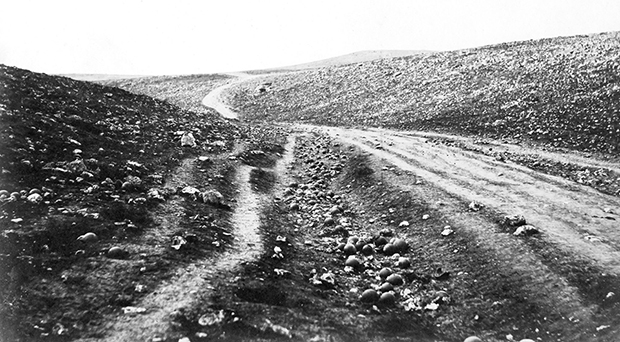
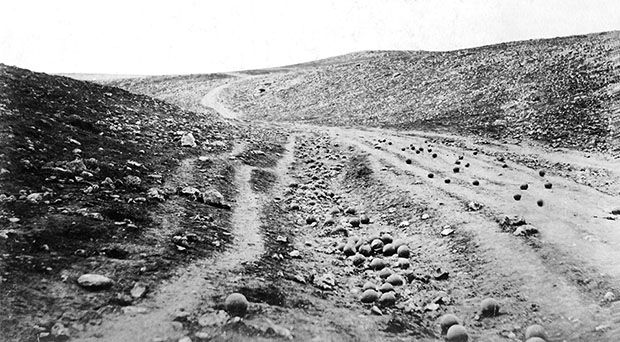
This is nothing new. Film has been an interpretive art since its inception. Below are two of the earliest war photographs ever taken. These are from the Crimean War in 1855, twenty-three years before the first movie was made.
canonball2
canonball 1

Both show a scene of desolation strewn with cannonballs. But it’s the second one that would make photographer Roger Fenton famous. Simply put, it’s a more striking photograph. Fenton wanted to show the horror and destruction of war, but he was restricted by his cumbersome film equipment. His solution? Move the cannonballs onto the road to take advantage of the high contrast. Although it was much more labor intensive than Photoshop, it’s the same basic principle. He altered his photo for effect. He sought a deeper “Truth” that wasn’t reflected in “reality.”

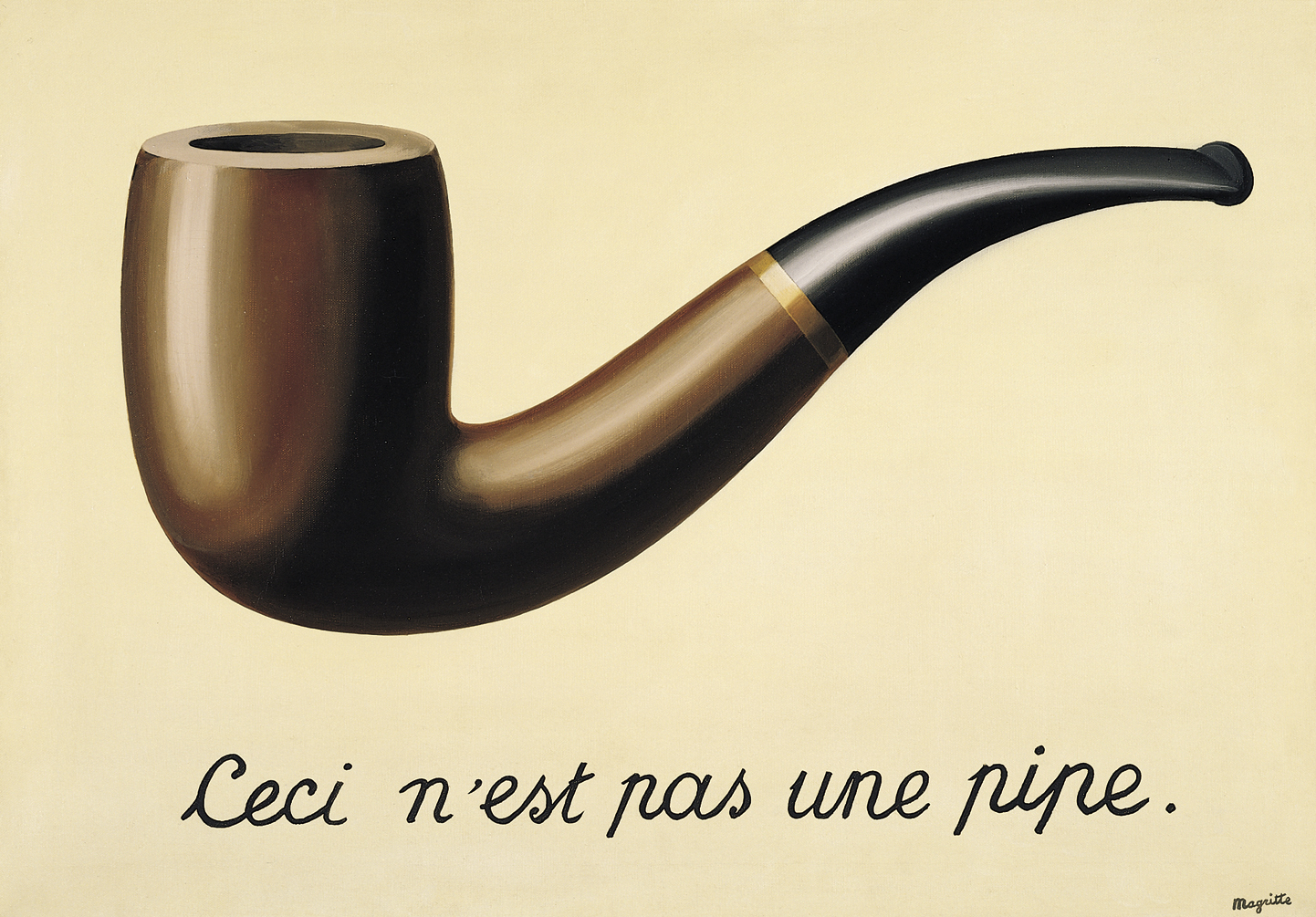
In the late 1920s, surrealist painter Rene Magritte created this thoughtful painting called “The Treachery of Images.”
the-treachery-of-images-this-is-not-a-pipe-1948(2)

If you don’t know French, the text reads, “This is not a pipe.” Of course it’s not a pipe. It’s a painting. It represents a pipe. Our brains conceive of it as a pipe, but it is not a pipe. The same holds true for all media.

A definition might be helpful here. Media is the plural of medium. The two definitions that come to mind are medium (size), as in the size between small and large and medium (fortune teller), as in someone who communicates between the living and the dead. Both contemporary definitions share the same Latin route, medias, which simply means middle. It shouldn’t surprise you that our news sources are generally referred to as “the media.” They are the middlemen. They transport ideas from the source to us. But along the way, they must interpret it.

Media is also used in the art world to describe the material that an artist uses. You may see the phrase “mixed media on canvas.” This medium might be oil paint, latex paint, clay, canvas, silk, steel, analog audio recording, digital video recording, computer programs, or even food. The point is, the artist interprets the world through this medium. Film, as an artistic endeavor, is its own medium. But never forget that the six o’clock news, the news radio traffic report, and the Wall Street Journal all operate in artistic mediums. To explain in more detail, I’d recommend listening to Malcolm Galdwell’s Revisionist History podcast from a 2017.

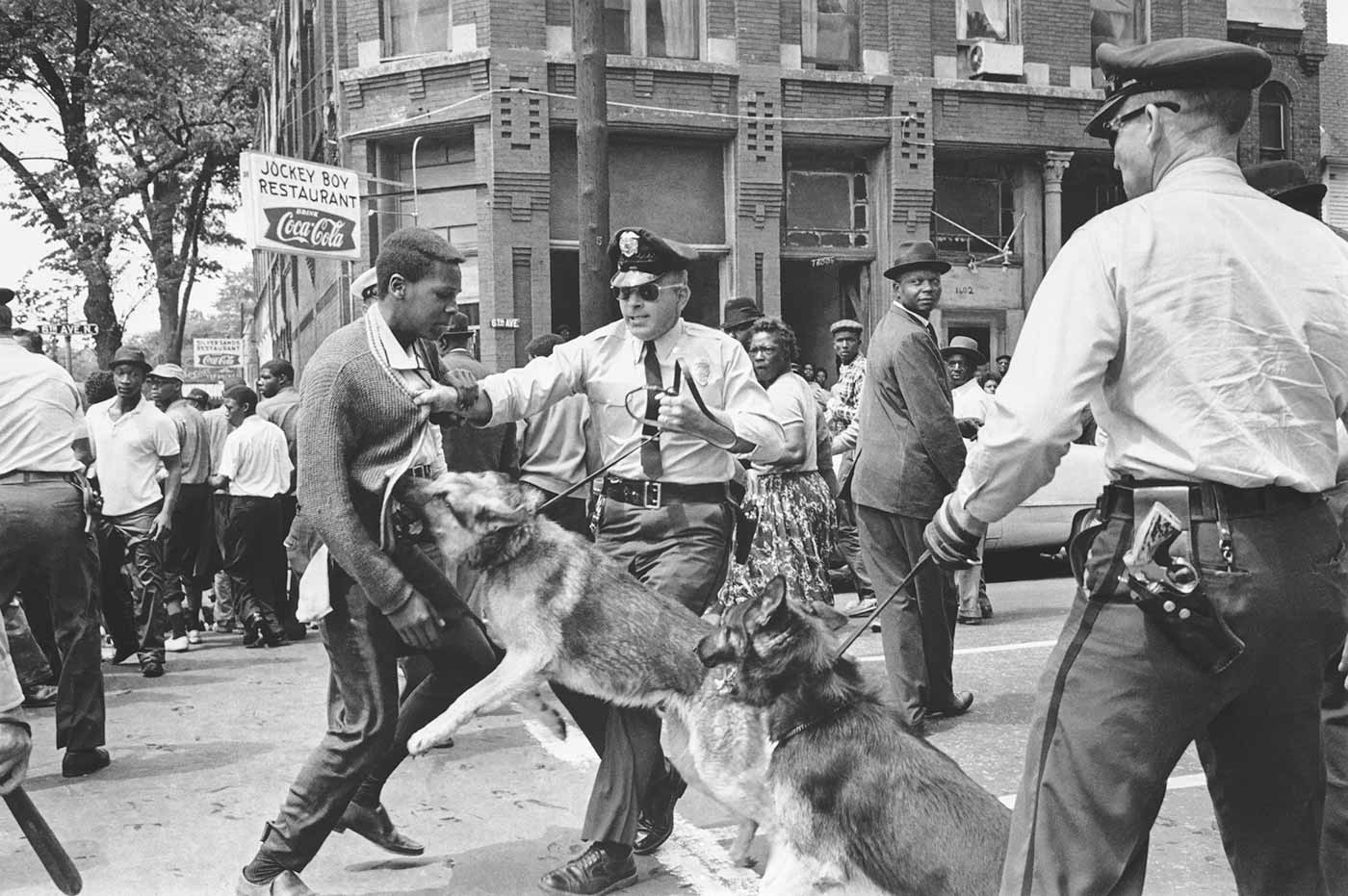
In it, he discusses this famous photograph from Birmingham in 1963.
footsoldier

It seems to show a police officer unleashing his dog on a black protester. But it doesn’t. The man in the photograph wasn’t part of the protest. He wasn’t a “Foot soldier,” as the Civil Rights activists called themselves. And the police officer hadn’t unleashed his dog on him. If you look closely, both men seem surprised and the police officer is leaning back, trying to pull the dog away. But that’s not what the nation saw.

This photo highlighted the brutality of the Jim Crowe south. It represented the discrimination, the institutionalized hate, and the lynchings. It shifted public opinion to the side of the Civil Rights movement, and it was all done on purpose. Bill Hudson, the photographer, chose this picture over the hundreds of other photos he had taken that day. The editor of The New York Times chose to put this story above the fold rather than any other news of the day. This is what a medium does. It takes the raw data, curates it, interprets it, and disseminates a cohesive message. In doing so, a medium must disregard data that fails to support its message or obfuscate its position. In its quest for “Truth,” it must necessarily deviate from “reality.”

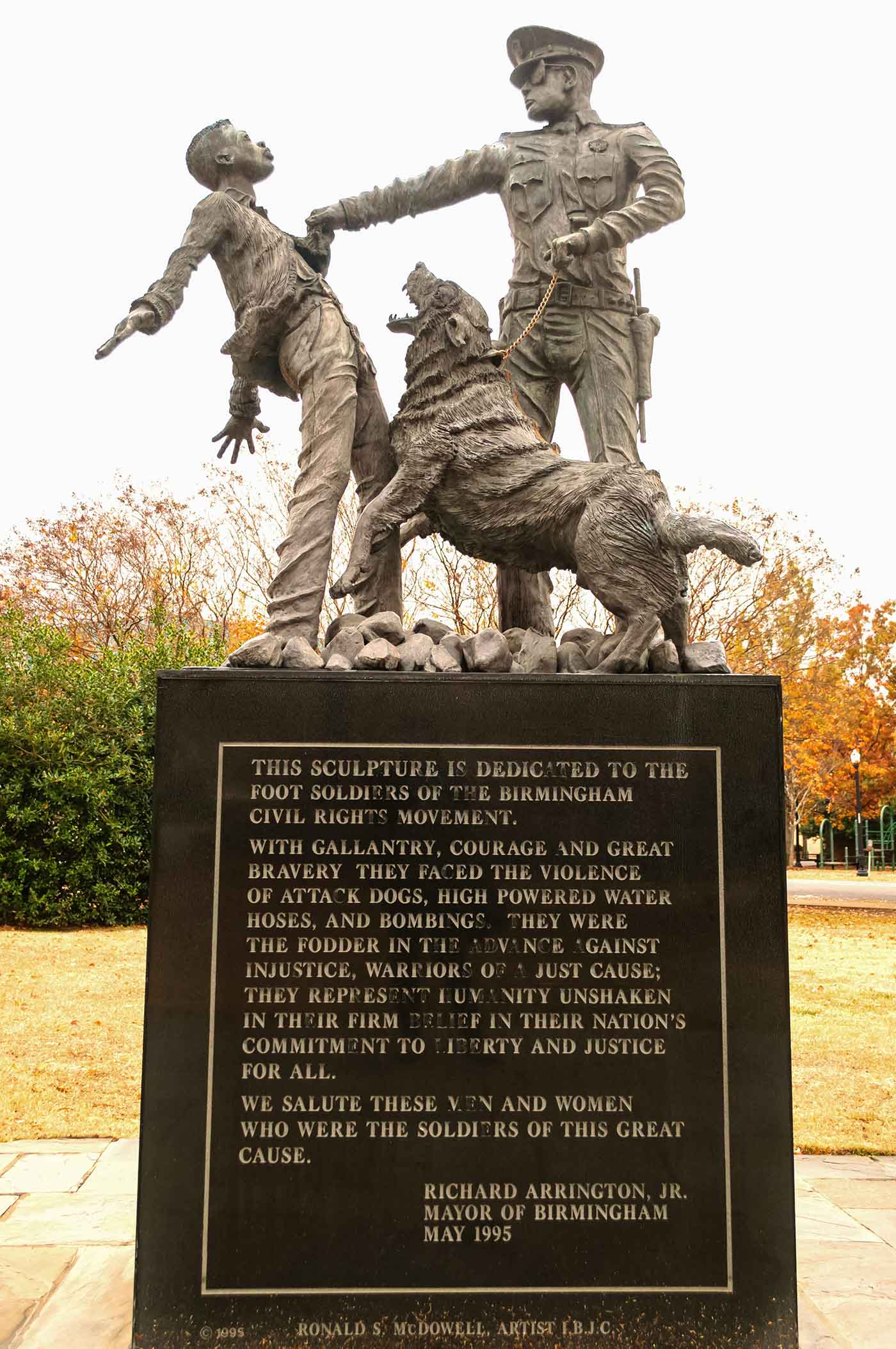
To further clarify, look at Ronald S. McDowell’s statue inspired by Bill Hudson’s photograph.
footsoldier2.jpg

The figure representing Walter Gadsen, the student, is considerably younger and shorter than he was in reality. The police officer is emotionless and inhuman, reminiscent of T-1000 from Terminator 2: Judgment Day, which came out four years before the sculpture was dedicated. The police dog’s mouth is wide open, bearing vicious, anatomically improbable fangs. But remember this is a piece of art. This is not a pipe.

The push and pull between film as art and film as documentation will never end. But as a filmmaker and consumer of media, it’s important to acknowledge that film is a medium. It is not reality. There is no magic bullet, no enforceable code of conduct, no ten commandments of filmmaking that will ever make film purely objective. Reality is reality. Film is film. The best thing you can do as both a filmmaker and a consumer is educate yourself.

It’s important to learn about technology, to learn what is possible and how to spot a fake. But it’s also important to learn about art. You know—art, that thing that gets cut when we want to tighten school budgets. Learn about artistic conventions. Learn to read the meaning behind how a frame is composed, how set decoration reinforces the theme, and how story arcs are constructed. Understand that models and movie stars are just people, too. Play with AI. Appreciate the complex and tragic story of Aaron Copland and Fanfare for the Common Man (examined here in another great podcast). See the allegory between Game of Throne’s White Walkers and climate change. Learn how Proust’s understanding of memory preceded neuroscience. Discover the 1920 play that introduced the word robot and the idea that robots are out to kill us. And, above all, recognize that just because you see a video of something doesn’t mean it’s reality. In fact it’s not reality. It’s just a video. And while there will be a degree of objective truth in it, there will always be a degree of the artist’s truth. After all, it is a video. It is not a pipe.

*NOTE: An earlier version of this blog appeared on this site in 2017. This version has been updated to reflect technological advances, specifically AI.

The Death of the Artist

In his book, The Death of the Artist, William Deresiewicz laments the decline and fall of the blue collar, professional artist. And while he unpacks a variety of legitimate and terrifying issues such as the unravelling of historic institutions and the job gobbling monster that is big tech (problems that affect everyone, not just artists), I feel like he misses a certain perspective about the motion picture industry. While the industry manages to sidestep many of the issues plaguing other artistic endeavors, it’s not avoiding them altogether. Because it’s a complex, multi-layered situation, I think it might be instructive to look at the motion picture industry through the three specific lenses: technology, art, and business. 

Technology (What is film?)

Deresiewicz differentiates between television and film, but it’s an arbitrary distinction. With the exception of the live or live-to-tape multi-camera shoot, production crews make feature films, television shows, and used car commercials the exact same way. Only a decade ago, we filmed thirty-second lottery commercials on 35mm Kodak. The question of “what is a film” has less to do with being “filmed” than how the content is delivered to an audience. 

In that regard, feature films suffer from a major constraint: they need to be long enough to justify the price of admission but short enough to satisfy an audience before their legs fall asleep. To do that, many films rely on tropes and cliches to keep a story moving forward. The boom in quality television over the last decade has allowed filmmakers to explore more interesting stories in more depth than they ever would have been able to on the silver screen. 

Are movie theaters dead? Well, not quite. Some nostalgic urge to hit the town and see a show will linger indefinitely. Movie theaters have yet to kill live theater, and a black and white silent movie won the Oscar for best picture in 2011. I can guarantee that ninety-minute visual storytelling will live on. It is true, however, that certain low-to-mid-budget genres are not currently profitable. Nevertheless, I’m not fully convinced that it’s a bad thing or that the trend won’t change.

Art (Are filmmakers artists?)

Deresiewicz defines four paradigms of artist: artisans (or craftsmen), bohemians, professionals, and producers. It’s the professionals—working artists who own houses and have dental plans—that Deresiewicz is most concerned about in his book. Chapter after chapter outlines how writers, painters, and visual artists fight for the crumbs of an ever-shrinking pie while struggling to find time to develop their art. And yet, in 2021, television and film are actually doing okay. 

One of the big things I need to point out here is that television and film straddle the worlds between art and commerce more than other industries. True, you’ve probably heard of writers who cut their teeth in the newspaper industry (when that was a thing), but very few renown painters started off whitewashing fences. 

On a film set, any given crewmember may have spent the previous day filming a television show or commercial. Disappointingly to most crewmembers, that often means that they’re capable of delivering a much higher quality product than the used car company requires, but it also means that art and commerce move around freely in the same space. Similarly, scenic painters, carpenters, costumers, and camera operators are highly educated, incredibly talented artisans operating at the top of their game. Not only do they need the vision to offer their own artistic input, they need to be able to shift gears to cater to someone else’s vision or mimic a historical style. 

In that way, filmmakers really match Deresiewicz’s first paradigm—the artisan—and I think it’s a good model to follow. Although it really doesn’t matter to the IRS, Deresiewicz’s paradigm poses an interesting question: “Are filmmakers artists?” That’s hard to say. If Deresiewicz is looking for talented individuals who work in a creative discipline and can afford middle class lifestyles, then yes. We’ve found a winner. But if you define artists as individuals who create things that make you question and challenge the world… well maybe not. The two aren’t mutually exclusive, but the latter is far less economically viable.

It’s also worth pointing out that filmmakers have always been “gig” workers. A crewmember (even a director) may have multiple employers in a single week. By and large, the thing that enables filmmakers to buy houses and get dental plans is unions. As people are trying to cobble together livings by working Uber and Door Dash, I can’t stress enough how beneficial it would be to unionize. 

Business (Are moving pictures safe from a flood of amateurs?)

On page 220, Deresiewicz states, “Film and television have a final advantage over arts like music or writing. Amateurs do not pose any threat because no one is ever going to mistake what they do for the real thing.” I have to disagree with him there. As technology has decreased cost, it’s become easier and cheaper for people to produce video content. Whether their productions can be considered art or even “feature films” is another matter. Birdemic is a prime example. 

If you think I’m being dramatic, you haven’t noticed how much content Gen Z watches on YouTube. Poor production quality has become synonymous with verisimilitude, and young viewers have managed to lower their standards below even “reality TV” quality. True, in the world of fiction, no one’s going to mistake Tommy Wiseau for the next Spielberg, but it’s a troubling sign if you recognize the names Tommy Wiseau or Birdemic.**

The bigger problem here is that as audiences accept lower quality, they refuse to pay for higher quality. Consequently, production companies refuse to pay as well. Just earlier today, I was speaking with a coordinator who lamented that the latest money-saving trend is to not hire location managers. And after a year of looking at everyone’s terrible lighting skills on Zoom, I’m afraid the bar for quality has been irreparably lowered. 

Where does that leave us?

Although not artists in the Van Gogh or even the Andy Warhol sense, filmmakers do work in creative fields, and they can make a decent living. Artisans produce work that is beautiful and functional. Their work may be thought provoking but is seldom a “think piece.” In other words, film—and all twenty-first century art—needs some utility or usefulness (see The Death of the Artist pages 272-273). Within this paradigm, artists are producers. I like this concept. It’s more democratic and egalitarian than the concept of elite geniuses sprinkling culture to the plebes. Artists are useful members of society who produce goods that can also be beautiful and thought-provoking. 

Consider the gorgeous pattern on this 1100-year-old Peruvian tunic. It is beautiful and useful, and I doubt that the person who made it had an MFA. Source: https://museum.gwu.edu/indigenous-american-textiles https://museum.gwu.edu/indigenous-american-textiles

That being said, our society is continuing to devalue labor and expertise. There’s no easy fix for this, but there is, perhaps, a silver lining. Art, throughout the ages, has always helped humanity cope with change and reframe tragedy into something that we can—if not understand—at least articulate. In the twenty-first century, art is not only doing this job metaphorically but literally instructing us on how to make a new economic paradigm. If you have a chance, check out Deresiewicz’s book. And if not, at least take a moment to check out some art. 

**In many ways, Canon’s 5D Mark II, the first SLR camera to shoot full high-definition video, marked a depressing turning point. In 2009, every film school grad with $3,000 suddenly thought they were a director of photography. Today, the image quality and editing ability of a smartphone are more advanced than the professional digital equipment I used in the early aughts. But to reiterate a point Deresiewicz makes over and over again, just because some can paint or film or sing does not mean they have the professional experience or artistic eye to be an artist.