You’ve probably come across a variety of blogs, books, and gurus who insist there are “rules” for writing a screenplay. (Maybe you’ve even read something to that effect on this very blog.) But are there really? Is there a secret formula for success? Well, yes… and no. Depends on who you ask. But maybe this is a better way to explain it.
An Analogy
Here’s one way to look at it. Screenwriting is like building a house. There are some generally agreed upon “rules” for houses: protection from the elements is a must. Generally a door to keep you and your stuff safe. Probably indoor plumbing and electricity. Bathroom and kitchen to make this a full service abode. Hopefully a window or two but otherwise…
The thing is, doors, electricity, and plumbing have rules. Doors need to be appropriately framed with headers. There are physical limitations to what you can do with electricity as well as safety precautions. Water flows downhill. If you want your sinks to drain and your toilet to flush, you’re going to have to install your plumbing correctly.
None of this has any bearing on the number or size of the bathrooms. None of it affects the shape of the house or the material you use. But there are definitely trends because some things are more effective or more efficient than others.
Point is: they’re all houses. They all meet the same basic requirements while expressing the art and lifestyle of the builder and the inhabitants.
Screenplays are similar, and many screenwriters will describe themselves more as craftsmen than artists. Yes, you need a creative mind, but you also need to know when to use a hammer and when to use a saw. Similarly, screenwriters need to be adept at understanding “the immutable laws of screenplay physics” as Blake Snyder calls them. Is your comic relief effective or overpowering? Does the story drag because the protagonist’s obstacles are episodic rather than escalating? Does the dialogue feel wooden because there is no subtext? Or maybe there’s no sense of urgency because your script violates the unity of time.
Or maybe your script feels cliched and predictable because itfollows the rules a bit too closely. (This would be the home building equivalent of a stamped out, mass production condo.)
And this is the final important thing to remember about the rules. Rules are meant to be broken.
Below are 2 examples of VERY successful movies that very clearly break screenwriting “rules.” I don’t care how much you want to bend the rules or try to contort things so they fit into some mold in a bizarro world. These are generally bad screenwriting choices, and yet, nobody cares.
Your Protagonist is not active enough.
Your protagonist should drive the story. Their decisions and actions push the movie forward. That’s why they’re the protagonist. Blake Snyder calls this “The Hero Leads.” And if your hero is just some schmuck who gets dragged from place to place like a cosmic lump on a log, Snyder calls him “Johnny Entropy.” But I have another name: Ebenezer Scrooge. Scrooge has probably gotten the most mileage out of doing the least work of any protagonist ever. Wikipedia lists 20 film adaptations of Dickens’ A Christmas Carol and more than two dozen TV adaptations or episodes. But what does Scrooge actually do with all this screen time? Nothing. Absolutely nothing.
Marley, not Scrooge initiates the Christmas hijinx.Then the ghosts of Christmas past, present, and future drag Scrooge on a time bending whirlwind. But apart from some tepid protests, Scrooge just goes along for the ride. Yes, at the end, Scrooge makes one massive 180 degree turn and starts giving his money away. But for the other 80 minutes of screen time, he’s as passive as Mr. Entropy himself.
The thing is, nobody cares. Since his creation 175 years ago, the audience has loved Scrooge’s largely unearned transformation from miser into philanthropist. And every ten years or so, a new production company capitalizes on Scrooge’s ability to do nothing and make cash. Do you always need an active protagonist? Well…
It’s important to hook your audience in the beginning of your script. Fifteen to twenty pages/minutes is a good rule of thumb. It gives you some time to establish your “world” before you hit your characters with the inciting incident. And when you analyze a story, most professionals look at scripts from the perspective of the protagonist’s conscious goal.
In Jurassic Park, a beloved, award winning, visually stunning, and financially successful film, you could make an argument for any number of main characters, but I think many people would agree that Alan Grant (Sam Neill) is the protagonist. What’s his goal? To make it out of Jurassic Park alive. Well that can only be his goal if the dinosaurs have already escaped their pens, which means the power going out is the inciting incident, which means, the inciting incident doesn’t actually happen until almost an hour into the movie!
Does that mean the power going out is the midpoint? Or should Spielberg have cut the first twenty minutes and had more screen time of Grant trying to save children from velociraptors. Or maybe you don’t always need your inciting incident in the first twenty pages.
You could make an argument for any of those things. But the bigger point is that Jurassic Park is a great movie and that the rules are not so hard and fast as they might appear.
As a filmmaker, it’s important to know the rules. Like a builder, you are part artist and part craftsman. The “rules” are more of a user manual than a blueprint. They’ll help you understand how a screenplay works without really telling you how to make one. So don’t cling to the rules like a Dickensian judge. Successful movies, like life, find a way.
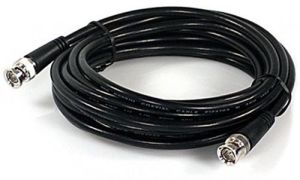
A while back I wrote an article about “grips,” one of the first film credits the average movie goer puzzles over. But gripping isn’t my day job. I’m usually a video assist operator. Most people, even my coworkers, don’t really know what video assist entails. Well hold onto your BNC*, because you’re about to find out!
The Basics
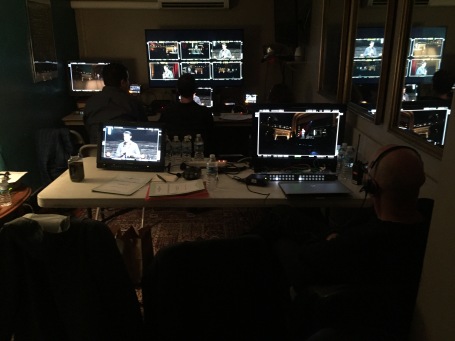
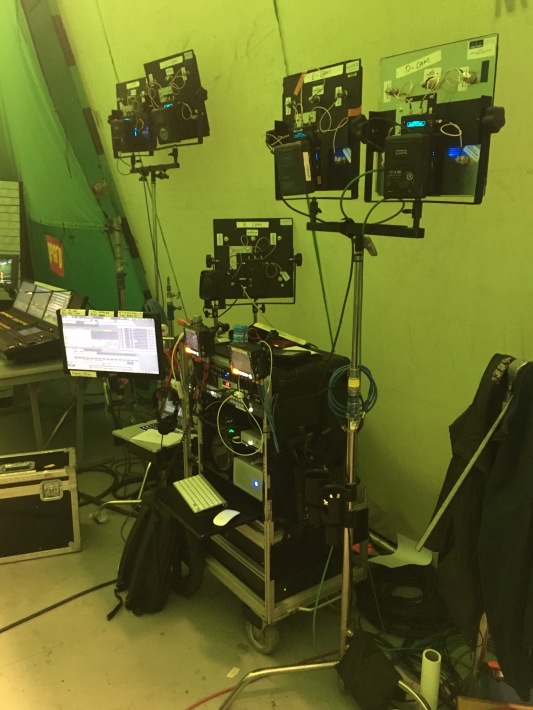
Do you ever watch the bonus features at the end of a movie and see the director watching a television monitor? That’s video assist. The video assist operator sets up that monitor. Pretty basic. More broadly, it’s the video assist operator’s job to get the image from every camera (no matter how many there are or where they are) to the director. In a nice, studio setting, it may look something like this.
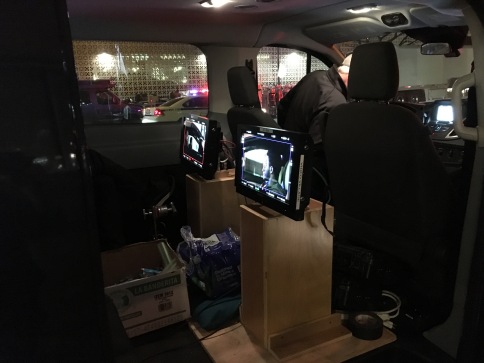
This is a control room we built for Comedy Central. On a stage, with one camera, this may be as simple as connecting the camera to a monitor (with some BNC). Things get a little more complex if you’re riding around the street at seventy miles an hour or if one of your cameras is in a helicopter. In those situations, we use transmitters to get the image from the camera to the director.
This is the “picture” car with the actors and camera. Our transmitter is on the roof.This is the follow vehicle for the director and assistant cameramen.And finally you have a follow van for the producers.
History
Once upon a time, we filmed on something called “film.” This was a roll of cellulose coated with a film of photo reactive chemicals that had to be developed before you could see what you shot. Each day, someone would run the film to a lab where it was developed. Then they would race back with “dailies” for the director and producer to review. It worked great for about 70 years.
But in the 1950s, television and video came onto the scene. Television captured images electronically and recorded them onto magnetic videotape so there was no need to “develop” film. Although the quality was far inferior to film, people could now watch what they filmed immediately after they filmed it.
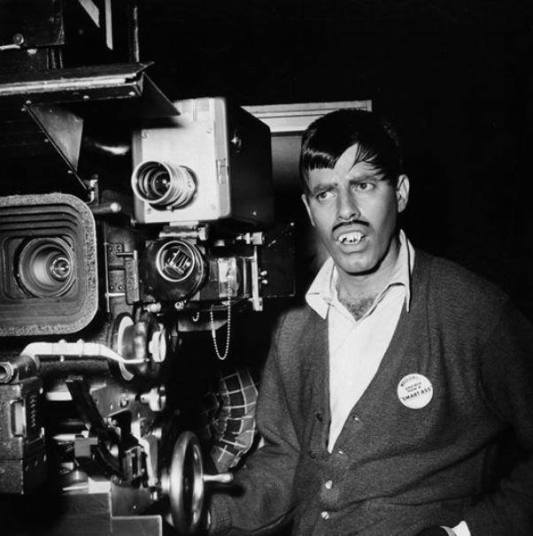
In 1960, Jerry Lewis used this new technology for his film The Bellboy. As both the director and the star, he couldn’t watch his own performance. He connected a video system to the film camera allowing him to instantly playback what was just recorded and make adjustments to his performance. This is generally considered the invention of video assist** and the first use of video playback.
In addition to getting the image to the director, the video assist operator records the action, allowing for immediate playback. This allows directors to re-watch takes without waiting for dailies. Directors may call for playback to check performances, look for continuity errors, see if a piece of gear was in the shot, check to make sure a stunt or effect worked, or watch something back in slow motion.
The video assist system is also used to record rehearsals. When we shot on film, this was a critical way to practice camera and actor movement without wasting thousands of feet of film. Today, most film production is done on digital video, but film crews still use rehearsals to practice shots before all of the lights, makeup, and effects are in their final places.
On a one-day shoot for a thirty-second commercial, playback may not be critical. But on something like a feature film that may take months and is generally not filmed in chronological order, playback can play a major role in keeping a film’s continuity. One intern I worked with said that video assist sounded like the film’s library. I kind of like that. (To be fair, the script supervisor is the film’s librarian, the video assist operator is the guy who has to go to the basement and find all of the old reference books…)
It’s important to point out that video assist is for reference only. When we shoot on film, the video feed or “tap” doesn’t have nearly the depth of field or exposure range of a piece of film. Video playback is not a completely accurate representation of what you filmed. In fact, oddly enough, video taps only record what isn’t on the film. The light entering the camera either exposes the film or goes to the video tap. Most things happen so quickly it doesn’t really matter. But several years ago, I was working with a producer to film gunshots for an action movie. When I played it back for him, he didn’t see the muzzle flash. I had to explain to him that was a good thing because it meant the muzzle flash was on the film. (Ugh. Tech talk.) And while that’s not the case with modern digital cameras, the video feed is a compressed version of what you’re actually recording. Much to the dismay of one producer whose intern deleted their favorite take, video assist operators do not record full resolution video files.
One other note is that for decades, video was recorded on tape. This led video assist operators to also be called video tape recorders or VTR. And while many ADs will still stay “let’s roll video” we moved on to computers about ten years ago.
Sync
In addition to the image, the video assist operator works with the sound department to get audio to the director. It’s critical to make sure all of the cameras and the audio are synchronized. Like watching a badly dubbed film, it’s disorienting and distracting to watch things out of sync.
This may sound like a simple thing, but let me give you an idea of what it’s worth to a production. A few years ago, shortly after we switched to high definition signals, quality, affordable transmitters were still in development. The transmitters we used, while great at long distances had a noticeable delay. (It takes some time to crunch down all of that video data, shoot it through the air, and unpack it back into an image.) This isn’t an issue if you’re filming across a football field. It is if you’re sitting ten feet from your actor and the actor on your television is moving noticeably slower. So after one frustrating day of filming on a new television show with transmitters that were less than a year old, our company shelled out $40,000 to upgrade to the latest transmitters.
Gak
Gak is a technical film term for stuff. And video assist operators have a lot of gak: monitors, switchers, speakers, cable, transmitters, hard drives, HDMI, BNC, barrels, patch bays, UPS’s, power conditioners, batteries, power cables (OSHA cords, P-Tap, Lemo, Hirose, 4-pin XLR), 3-pin XLR, mini XLR, intercoms, video printers, and on and on and on. Again, all of this is to get the image from the camera or cameras, synchronize it with the audio and give it back to the director for live viewing and playback.
It’s a lot of techno-wizardry and it can be kind of mesmerizing. Maybe that’s why everyone likes to look over your shoulder. Or maybe they just like watching TV. Whatever the case, the video monitors always attract a crowd. The director, assistant director, and script supervisor are generally at the monitor. The producers will often get their own set of monitors. Then there are the hair, makeup, and costume people who need to be sure the actors look their best. And you’ve got the additional assistant directors cueing background actors, the electric and FX department standing by for cues, the humane society looking out for their four legged actors, and a couple of groupies for good measure.
And of course, all of these people need chairs and coolers and tents and heaters if it’s cold and, frankly, before you know it, you’ve got a regular village on your hands: a video village, which has become the industry term for, well this.
One of the biggest positives about video assist, however, is that you always want to be near the director. So if it’s raining, you’ll be dry. If it’s cold, you’ll be warm. If it’s warm, you’ll be cool. And you’re generally the first person to know if craft service is serving something better than hot dogs.
24 Frame Playback
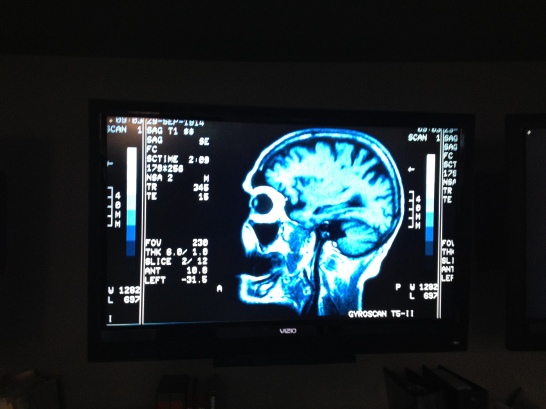
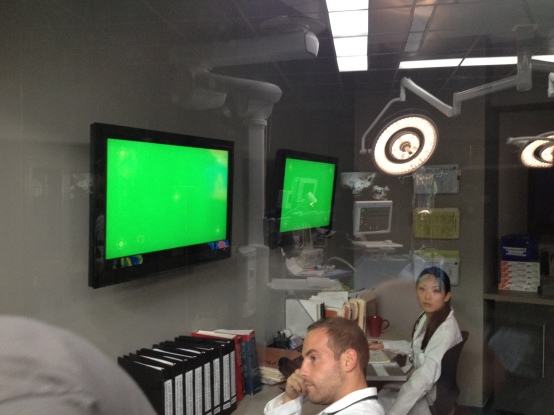
Video assist operators have one more vital function that isn’t related to anything else I’ve mentioned so far. We are responsible for every “on-screen” video display. Every time you see a smart phone or a television or a computer monitor, a video operator has provided that image. Here are a few of the riveting images I’ve put on screens.
Amazing stuff, right? The video operator works in conjunction with the director, props department, and editor or visual effects department to make sure the right images get on the right monitors. Sometimes, that image doesn’t exist yet, so we just put green or grey screens on the monitors. That helps the VFX department create the image in post. Green makes it easier to remove the image. Grey allows light to fall on the set and actors like a real television.
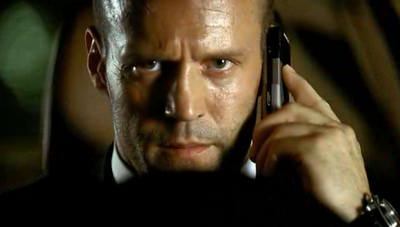
Video assist operators need to be careful about what they put on screen. One of my coworkers was troubleshooting an issue with his personal phone and forgot to delete the number when we went to shoot. Months later when the DVD came out, he was inundated by calls from curious fans who wanted to know who Jason Statham called in the middle of the film
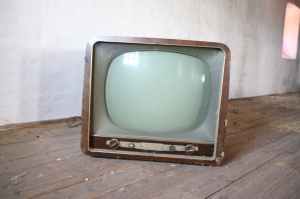
The name, “24 frame playback” comes from the fact that film cameras used to film 24 frames or individual pictures a second. Televisions, however, display 29.97 pictures a second. So for every 1 picture a film camera takes, a television displays 1 ¼ pictures. (Oh God. Math…) Because the television is projecting light, that means ¼ of the television screen will appear brighter than in every picture the film camera takes. That’s why in old movies, you will see television screens flickering in the background. To fix that, playback operators force the television to display images at 24 frames, not 30.
Modern TVs and flat screens like your phone don’t display images the same way older TVs did, so we don’t actually need to create a 24 frame video. That’s why it’s anachronistic to call it “24 frame playback” when it’s no longer 24 frames and playback actually has another meaning. Sheesh.
For some more information about how a television actually works, check out this fascinating video from The Slow Mo Guys.
Roll the Credits
There you have it. Another one of those hundreds of names that scroll by at the end of a movie explained. While it’s true that most of the work of the video assist operator doesn’t end up one screen, the movie – and filmmaking – wouldn’t be the same without them.
*BNC, the ubiquitous tool of the video assist operator, is a type of connector for video cables. BNC is also refers to the cable itself. Many people erroneously think it stands for “British Naval Connector,” a rather shoddy backronym for an American invention. It actually stands for “Bayonet Neill-Concelman,” the connecting mechanism and the name of its inventors.
You’ll read a lot of blogs and books about how to get representation as a screenwriter or how to get a script sold. But most of these present general guidelines or suggestions. I’d like to share my own experiences with one particular script, and the lessons I’ve learned along the way. My one caveat is that this is only one script from one person. How applicable will this be to you? I can’t say. But here’s my story…so far.
The Script
Photo by rawpixel.com on Pexels.com
I don’t recall exactly what instigated the idea, suffice it to say that everything kind of clicked. The script has a clear premise (housewife thinks mother-in-law is a serial killer), small cast, few locations, and it features several great roles for women—something Hollywood seems to be looking for right now. After receiving some good feedback on the first draft, I polished it up and took it to the next level.
The Budget
Photo by Pixabay on Pexels.com
I thought having a ballpark budget might be a good thing to know when pitching to producers. (I have subsequently learned they generally don’t care what you think a film would cost to make.) Since I’m friends with a number of production managers, I asked one to come up with a ballpark figure for me, and we landed at just under $1 million. Certainly a million dollars more than I have lying around, but not a high budget picture by any stretch of the imagination. She also pointed out that based on my cast of characters, my script would be eligible for certain breaks from SAG, the actor’s union. Armed with a script and some solid production information, I started talking to producers. This is where I learned the first big lesson.
A lot self help and motivational sources will tell you that when you undertake a new endeavor, you should be very vocal about it, telling your family, friends, and coworkers what you’re up to. The idea is that 1) it makes your endeavor more real, not just an idea. Telling everyone also creates peer pressure for you to follow through. 2) You never know who might take an interest in your endeavor and offer some advice or help. So I started talking about my script.
The first producer I mentioned it to (who did read it), said it was fantastic, I should frame it, hang it on a wall, and “forget it.” He had just finished a low budget feature and was currently being sued by the writer or director or someone and thought that it just wasn’t worth the headache.
The second producer I spoke to sounded very excited. I’d been working with him on commercials for years, and I knew that he produced ultra-low budget movies from time to time. He sounded very enthusiastic, told me to send the script to him, and said he’d be sure to get it in the hands of his director. I spoke to the director, too, and he also sounded interested. I have never seen or heard from either of them since. I did however hear that they’d apparently collaborated on another project recently. (Hopefully, it wasn’t a rip off of my script, but time will tell…)
Then I reached out to a friend of a friend of a friend who’d just written and produced his first film. He was nice enough to call me back and have a lengthy and informative conversation, wherein he also told me it wasn’t worth the headache. More importantly, he said I was looking at the budget completely wrong. The problem is, an ultra-low budget film isn’t expected to make back very much money, so producers and investors generally avoid them. Ultra-low budget films tend to get made by maxing out credit cards, mortgaging the house, or schmoozing a rich uncle. Otherwise, you want to look at the $6-10 million range. Still low budget for sure, but you either need enough money to hire A-list talent or have the script (or chutzpah) to convince people to shell out several million dollars for your idea. This brings me to the second big lesson.
Pre-Sell
Photo by Burst on Pexels.com
Everybody hates risk. And in the extremely speculative world of filmmaking producers and investors mitigate risk by making sure a script is “pre-sold,” that is, they can guarantee a certain number of tickets will be sold. Projects can be pre-sold in a variety of ways. Star power is the most obvious. Throw an A-list celebrity on screen and you can (almost) guarantee a certain number of tickets. Intellectual property (IP), is one of the most popular things right now. If you can say Ironman comics or The Girl on the Train have sold X number of copies, you can be fairly certain your movie will sell Y number of tickets.
The thing that surprised me with IP as I continued to have conversations with producers was how little success you needed to show. Granted, they’d prefer to buy a New York Times bestselling novel, but I definitely saw a producer’s eyes go green when a fellow screenwriter mentioned that she’d sold a few thousand copies of her vampire erotica.
Another bizarre pre-sell that’s cropped up is large social media followings. Did your short film get a million hits? Do you have a hundred thousand Instagram followers? Is your fake Twitter account for an anthropomorphized self-driving car constantly trending? Maybe it needs it own movie.
Foreign markets are another major pre-sell. The rest of the world likes American movies and they often make more money overseas. That’s even (or especially?) true for movies that aren’t blockbusters. For some reason, China loves investing in American films. And as they say, a billion times anything is a big number. As long as your film has something to do with China, has a Chinese character, doesn’t malign communism, and doesn’t include time travel (yes, that is real caveat), you might be able to convince a producer that your script is worth a boatload of yuan (tariffs notwithstanding). That is, as long as it’s not a comedy. Which brings me to the next big lesson.
Don’t Write a Comedy Feature
Photo by Gratisography on Pexels.com
Comedy doesn’t translate well. There’s a great documentary called Exporting Raymond where Ray Romano tries (with much struggle and hilarity) to produce Everybody Loves Raymond in Russia. But he had a major issue initially getting the Russians to accept the overall comedic tone of the show. In the movie, Romano explains why simple, stupid pop songs like Brittany Spears do so well overseas. It’s pretty straightforward to translate, “Oops, I did it again. I played with your heart, got lost in the game. Oh baby, baby.” Clever wordplay and cultural jokes don’t travel well. (Consider this anecdote about American football. On a film set, if there’s a mistake that requires another take, the assistant director will often say, “Flag on the play,” a reference most Americans will understand.
A friend of mine was working on a Bollywood film and every time he said “flag on the play,” the grip department thought there was an actual flag—a piece of grip equipment—left in the shot. How’s that for comedy?)
So if you’ve written a comedy, you’ve just cut off a big part of your pre-sold tickets. Not good.
The other problem is that even if a producer thinks you’re funny, producers are usually weird people. Successful producers like to keep the world at arm’s length or do drugs… or both. In any event, even if they like something they can be sure if the hoi polloi will like it. “How will it play in Peoria?” as they like to say. That gives you the opportunity to launch your (semi) successful standup or improv career into a script sale (a phenomenon you may have noticed). But if you, like me, don’t have that track record, producers will hesitant to take a chance on your script.
Give TV a Whirl!
Photo by Rene Asmussen on Pexels.com
One producer was nice enough to point out to me that television might be worth a try. For one thing, we’re in the platinum age of TV. For another, there’s far more work for writers in TV. Each show has a staff, as compared to the single writer for a feature. A “season” of TV (now often down to ten or thirteen shows), is also much cheaper than a feature film. Both of these are ways producers can mitigate risk on their investments. Which means TV is a great opportunity for new writers and comedy writers… assuming you live in LA.
I should also point out that as a new writer, it’s very unlikely you’ll be the showrunner of your own pilot. Producers are unlikely to pick up a pilot from an unknown writer because they have no idea if the concept has “legs,” if it will keep going for season after season. If it really is that great of a concept, they may try to produce the show, but they’ll almost certainly bring on a more experienced writer to run it. (Ironically, you need a pilot in order to land that first gig, even if it’s just getting coffee.)
That was something to chew over, and brought me to my final big lesson.
Branding
Producers (and agents and people in general) are very easily confused. If you pitch them a comedy feature, and they ask what else you’ve written, don’t say a horror television pilot. Their brains will explode. One of the difficulties all writers face is finding their voice. So even though you’ve only ever written hardcore slasher films, you may have a fantastic idea for a rom-com that just won’t leave you alone. And why not give it a try? Maybe you have a knack for it. Fine. Just don’t mention it in a general meeting!
It gets a little weird because I’m the first to acknowledge that people can be talented in many things and if you’re an adept writer, you should be able to shift gears to a new genre at least passably. In any event, it’s not recommended. I suppose that’s why writers have nom de plumes. (And yes, famous directors and writers can get away with hopping to new genres, but they’ve already proven that they know what they’re doing.)
One producer did, however, bring up an interesting strategy. So many middle of the road, mediocre movies are made for TV all of the time, you could probably use your slasher or raunchy comedy sensibilities to spice up something that would otherwise be a totally forgettable movie of the week.
Where’s that Leave Me?
Still writing (a good place to be for a writer, though never high paying enough). I still have my script, and I’m still pitching it to producers. Knowing what I know now, I probably wouldn’t have started out of the gate with this one. If you aren’t anchored in place and want to be a screenwriter, I would recommend moving to LA and lookong into TV.
If not, dramas based on intellectual property (true stories, public domain, folktales, that weird fan fiction your college roommate writes) might be your best bet. But one recurring theme I’d heard in my quest was, always pursue what you’re passionate about. That won’t guarantee anything about ever seeing it made, but at least you can enjoy it for the time (likely years) you’ll be working on it. I’ve also stumbled upon a handful of websites that screenwriters may find interesting.
The Black List makes your script available to producers, agents, and anyone else who pays to get on their site. It offers affordable coverage. Scripts that are well reviewed and build a buzz are published each year on an actual black list: a list of all the great scripts that weren’t produced in the past year. Before you think this is your answer to getting noticed by Hollywood, I should mention that one producer told me, “The Black List is huge.” So you may get noticed, but it’s also very likely, you will be lost in a sea of mediocre scripts.
I’ll be honest. I’m not a fan of IMDB as a professional resource. Their “verification” process is weak and opaque. (I’ve been in a production office with a producer screaming at them because they listed private, inaccurate information about a film that was in pre-production.) They also don’t seem to understand actual film crew categories. (There’s no such thing as a “camera/electrical” department and video assist is decidedly neither of those!)
But IMDB Pro can be helpful. It is a subscription service, although you don’t need any professional credentials to join. (Another bizarre feature.) In any event, it’s a good resource to see who represents whom, who owns or works for what company, and what films are in production. Useful data as you target your pitch.
Ink Tip is a kind of classifieds section for scripts. You can list your script for sale or you can browse what producers are looking for. You can also sign up for a free weekly e-mail that gives you access to 2 leads…for free. I have had some “success” connecting with producers through Ink Tip.
Many script services focus on perfecting your craft and tightening up your script. Roadmap Writer’s does that, but their bigger asset is connecting you with agents, managers, and producers. There are webinars, general meetings, and pitch sessions for you to learn about the business side of the industry. And remember, these are working professionals (not script gurus or professors). They can tell you, specifically, why they would never produce your script. Or, on the other hand, if they really like it, they may just add you to their rolodex. As of this writing, 51 screenwriters have gained representation through Roadmap Writers.
I’ll be honest. I haven’t really used Stage 32. It seems to be a kind of Facebook/LinkedIn for filmmakers. But like Roadmap Writers, they also offer pitch sessions, often with the same producers, agents, and managers. From that perspective, it’s another good opportunity to get face time with the very people your’e trying to reach.
This is a great site for following the news in Hollywood. Like IMDB Pro, you can use this to research scripts that are selling and, more importantly, who’s buying them. If you live in LA, they also have a jobs section (although it’s more for assistants than writers).
Last year, I wrote a post about Unity or Time (or why biopics have good acting, but are really boring). The basic problem is that real life is mostly boring. And even when you condense a very interesting person’s life into a two hour window, you’re violating one of the foundational laws of screenplay physics: your main character (real or fictional) is under pressure. If they do not achieve their goal soon, they will face serious, negative consequences. (Kind of hard to make that argument when your screenplay covers seventy years…)
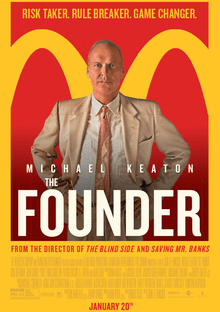
John Lee Hancock’s The Founder sidesteps problem in two very clever ways. Overall, it is a very well put together film, and unquestionably worth your time. But if you’re struggling to make your “based on true events” story engaging, you should take particular note of how The Founder handles time.
The Founder tells the story of McDonald’s founder Ray Kroc (deftly and engagingly portrayed by Michael Keaton). One may argue that it is not a proper “biopic” in that it doesn’t tell Kroc’s life story. But that’s point number one. Ray Kroc is only interesting to us because he founded McDonalds (well, franchised it, but whatever… you have to watch the movie). We don’t care what his childhood was like, what he did during the war, or how he whiled away his golden years.* And Hancock wisely choses to focus on that one interesting “moment” of Kroc’s life: the founding of McDonalds.
The second, more interesting point, is in how Hancock handles time: he doesn’t. Intellectually, we know it takes time to get building permits, train staff, track revenue growth, etc. And all of this time, while Kroc is waiting to turn a profit, he’s sweating bullets. But Hancock never tells us how much time has passed. He never shows the changing of the seasons or ages Michael Keaton. So while the real events took anywhere form weeks to years, the pacing of the film feels like each scenes follows day after day and may only have taken a week or two. It’s entirely engrossing.
This all falls back on Robert D. Siegel’s expertly crafted script that continues to escalate and grow with each new scene. We’re not sure how long it takes for Kroc to realize he’s not making any money, and it doesn’t matter. The point is, he’s not making any money. This leads to a second infuriated phone call to the McDonalds brothers, Kroc’s wife finding out about the mortgage, and Kroc’s quest to reduce refrigeration costs (a plot point that instigates all kinds of other interesting complications). The story just keeps pressing onward.
Is this an accurate representation of Ray Kroc’s life? I can’t say. But I can tell you it’s a movie. And it’s a damn good one. So keep these two tricks up your sleeve as you work on your future projects, especially if they’re based on true events. When you get down to it, your audience’s time is the biggest factor you need to consider. And if they are emotionally engaged in your movie, they won’t be looking at the clock. It may not be a burger in thirty seconds, but it’s a service you should definitely aim to provide.
*Some mention of Kroc’s backstory (previous failed business ventures) is appropriately and entertaining revealed as backstory through dialogue in the second act of the film. It’s a great case study in effective use of dialogue and exposition.
As a work of fiction, even the most “realistic” screenplay will have some made-up elements. But there’s a bigger question about how to make aliens or time travel or ghosts “believable.” That’s where we get into “story reality.” What is the reality of this world you have created?
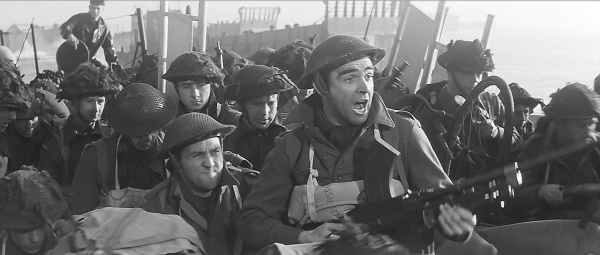
A lot of this has to do with how your characters react to the situations you put them in. If you walk down the street this afternoon and come across someone bleeding to death, how would you react? Call the police? Call an ambulance? Vomit and run away? Now what if you were walking down a beach in Normandy on June 6, 1944? You may vomit and run away, but you might also pull out a machine gun and start shooting Germans. Not a great option in the first example, but perfectly understandable in the second.
The problem is, if you create a fantasy world like Hogwarts or the Shire or Tatooine, your audience can only accept the “reality” of your story based upon how your characters act and react. Apparently, cutting off someone’s arm with a laser sword isn’t a very big deal in the Star Wars cantina. It may, however, be frowned upon at lunch in Hogwarts. Whichever the case, your characters need to react consistently to the “reality” that you have created.
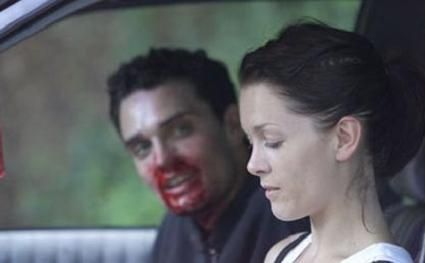
That brings me to Zombie Honeymoon. I can’t necessarily recommend that you watch this movie. I watched it because seeing what doesn’t work can often inform you on what does work. Zombie Honeymoon (hilarious premise) was in many ways a hilarious movie. Newly married husband suddenly becomes a zombie and his wife struggles with the “reality” of that situation. The problem was, she had a very different view of “reality” than everyone else in the script.
The guy at the video store freaks out when he sees the zombie. The local cop is out looking for missing persons. And the best friend runs away when she realizes the husband is “undead.” It’s a consistent reality that aligns with our own reality. But the newlywed wife decides that she’s going to see her husband’s zombification through much as though he had been diagnosed with cancer or Alzheimer’s.
The thing to remember here is that by forty minutes into the movie, her husband has already killed half a dozen people. So instead of marrying Augustus Waters (The Fault in our Stars), she’s really married Michael Corleone (The Godfather).
The premise could still be resuscitated as a farce as the wife hides one body after another and tries to tape her husband’s ears back on for their double date, but it doesn’t. The new wife agonizes over “what to do,” leading to some decent performances and genuinely uncomfortable scenes as she hugs her decomposing husband. But her disregard for everyone else who’s died (including her best friend) and her casual acceptance that her husband is in fact a brain eating, murderous, animated corpse create a disjointed world that doesn’t follow the rules of its own “reality.” It was almost as though everyone else was hired for a horror movie and someone told her it was a Lifetime movie of the week.
Suffice it to say, a consistent “reality” is critical even if your script is reanimating corpses. For more thoughts on story reality and credibility in screenplays, check out these links.
Believe it or not, filmmaking comes with a lot of rules. And while artists may scoff at some seemingly arbitrary conventions, it’s important to know why they exist and how they can affect your audience and artistic vision. Today’s topic for discussion is the 180 degree rule.
Don’t cross the line!
The 180 degree line is an imaginary line that follows the action of a scene. (If you’ve never heard of it, it will make more sense as we go along.) For those of playing at home, you may recognize that 180 degrees is half of a circle. The rule dictates that your camera will always be on the same side of that line.
Who the F#€& came up with that?
Part of this is just physics. If you’re watching something (a sporting event, a street fight, paint drying) you tend to watch it all from the same place. If you want to change your perspective, you can walk to the other side of the stadium, but it’s going to take you a few minutes.
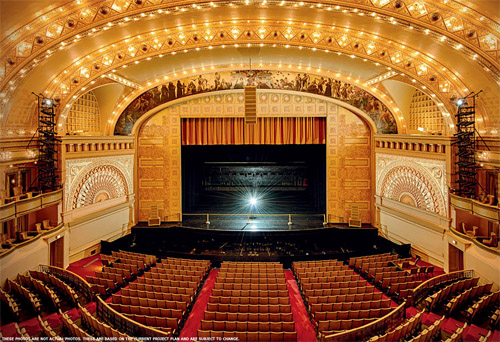
The ancient Greeks, who basically invented western civilization (and also theater) and are frequent this blog’s whipping boy, decided to set things in stone. Literally. They started building all of these amphitheaters.
You’ll notice that all of the seats are on one side. (It’s almost like half of a circle?!) The front of the stage makes a straight line, which taken as a whole, is called the proscenium. It is betwixt this line the actors and audience shall not cross.
Here’s another ancient theater with a much fancier proscenium.
In all of these cases, you can only watch the action from one side of the stage. As a spectator, whether you’re in seat B6 or FF139, you’re always watching on the same side of the line.
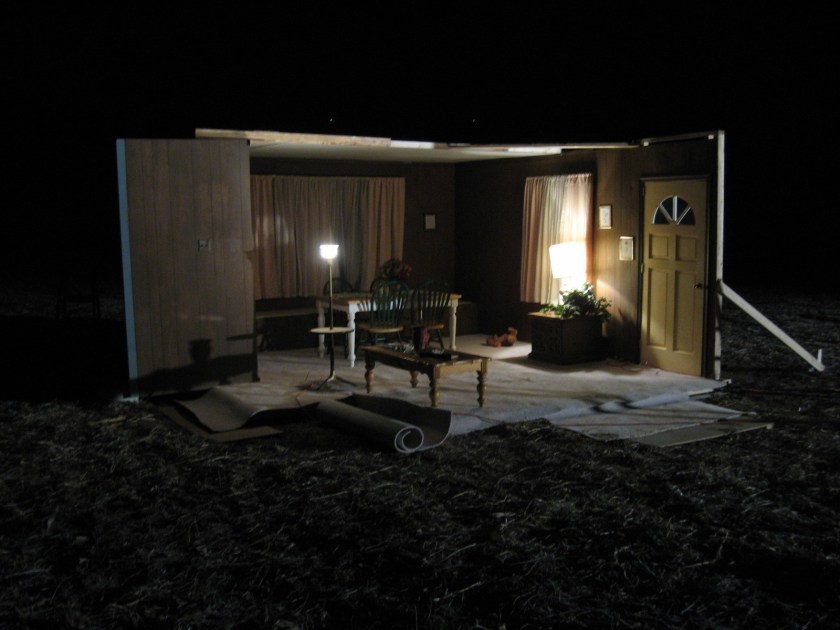
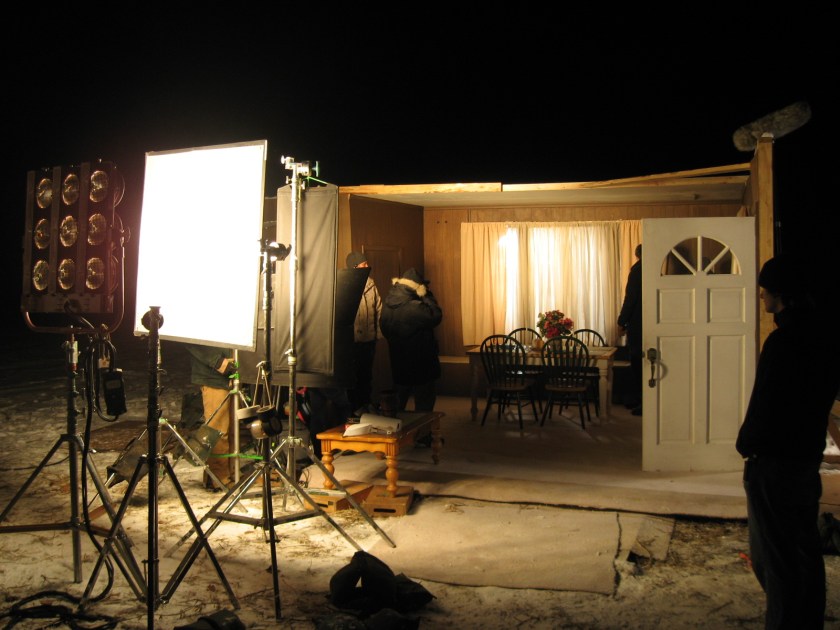
Now if we build a set on the stage, there would only be three walls. Much like this living room set from Malevolence: Bereavement.
When you build three walls of a set, the “fourth wall” is the proscenium. The audience must pretend that there’s a fourth wall. And that’s why an actor speaking directly to the audience (or looking straight into the camera) is “breaking the fourth wall.”
Millennia later, film followed suit, generally filming all of the action from one side of the line. In addition to following an established dramatic convention, it also makes it easier to film. The lights, camera, dolly track, sound mixer, additional second second assistant director and therapy dog all have a place to hang out without mucking up the set.
Moving from a wide shot to close ups, filmmakers need to make sure they stay on the correct side of the line. Consider two people sitting at a table, talking.
Sally, on the left, is looking towards the right frame of the camera. When you move in, she STILL needs to be looking to camera right.
Even in a closeup without Harry in the shot, she’s still looking to the right.
Similarly, Harry should always be looking to his left.
(Screen shots from When Harry Met Sally’s infamous restaurant scene.)
A simple situation like this is pretty easy and straightforward, but it would also make for a boring cinematic universe. The good news is, actors can move. And every time the actor or camera moves, so does the line. In fact that 180 degree line is more appropriately called the “action line.” And when things are moving, that line can go all over the place.
Long Steadicam or handheld shots like this work because the audience can follow the action in real time. It’s when you cut to a new camera angle that things can get confusing.
For example, if someone exits frame to the right, which direction should they enter the frame from in the next shot? If there are six characters standing in a circle, what is the direction of the action? If a character hands a prop to another character whose back is turned, should he be reaching camera left or camera right?
Fortunately, the script supervisor and director of photography should be keeping track of all of this. If you’re an aspiring DP or scripty, well, you’ve got some research to do. (I would recommend Joseph V. Mascelli’s The Five C’s of Cinematography to start.) But the intricacies of continuity and action lines aren’t the real reason I wanted to write about this.
Who cares?
Although this won’t really affect the writer, the 180 degree rule has some interesting psychological effects that influence storytelling. For example, if two people… or Matchbox Cars are chasing each other, they need to be traveling in the same direction.
If we turn one of the cars around, they may be headed for a collision.
Similarly, if your character drives from left to right on his commute into work, he should drive from right to left on his way home. Odds are, no one will ever notice whether or not you do this, but it’s one of those subconscious things that can disorient an audience if done incorrectly.
Mascelli goes so far as to argue that vehicles traveling west to east like an airplane flying from New York to London should move left to right on screen. I guess that wouldn’t apply to Australian filmmakers…
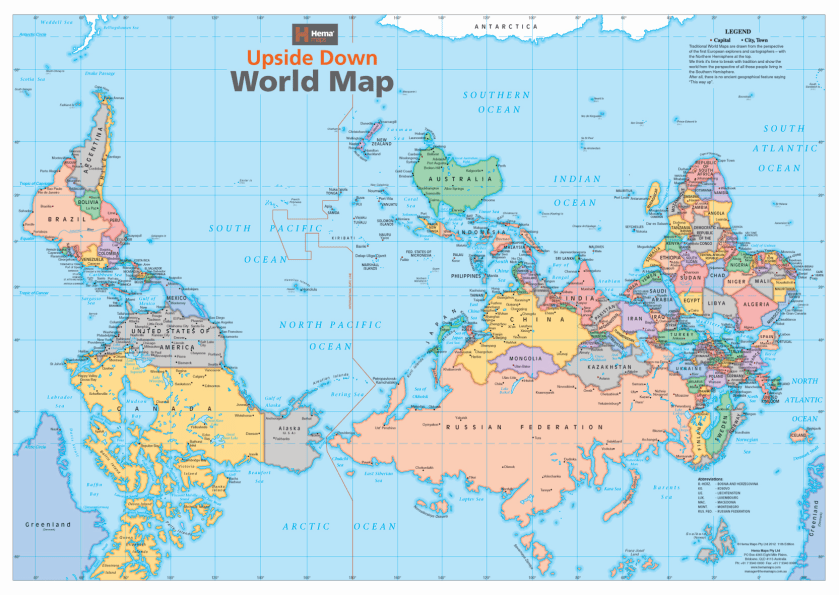
Once upon a time things that traveled from left to right were considered to be progressing while things that traveled right to left were regressing or retreating. (Presumably because most western languages are read left to right.) Curiously, that doesn’t seem to hold as much weight as it used to. The Eagles, the only team in the NFL whose logo faces the left finally won a Super Bowl.
(Look at those contrarians in the last column!)
And a not too distant political campaign with a right-pointing arrow didn’t end up working out so well.
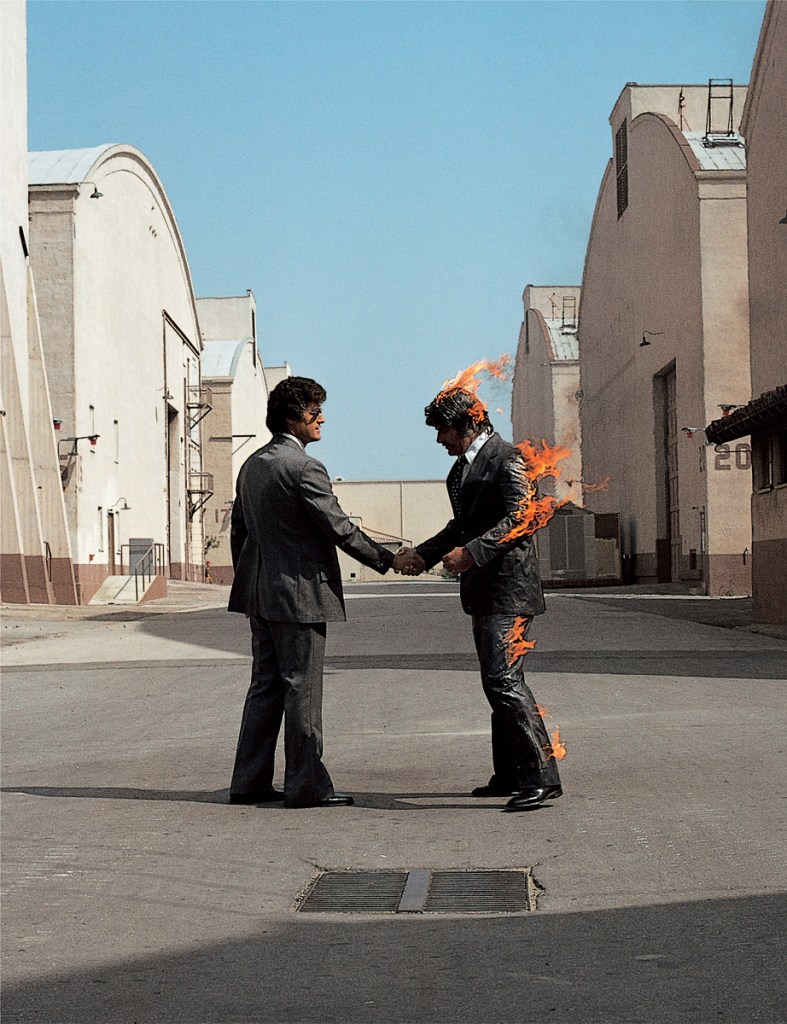
The line can also effect how you feel about a character. The furthest you can get from the 180 degree line is 90 degrees. This is the most objective or voyeuristic point of view. You’re not part of the action, you are an outside observer.
(Not sure what’s happening on the cover of Pink Floyd’s Wish You Were Here, and I’m pretty happy at this distance.)
As you get closer to the line, you become more subjective to the point where characters are speaking directly to you (breaking the fourth wall), and you feel like you’re part of the story.
That’s a hefty workload for one little line.
When can you break the rule?
When ever you want! The thing to remember is that audiences have become accustomed to these conventions. Breaking the rule will lead to confusion and disorientation. If that’s the feel you’re going for, do it! Just make sure the audience can still follow the story. (Remember that post about empathy? You want to be sure you’re showing your character’s confusion, not just confusing the audience.)
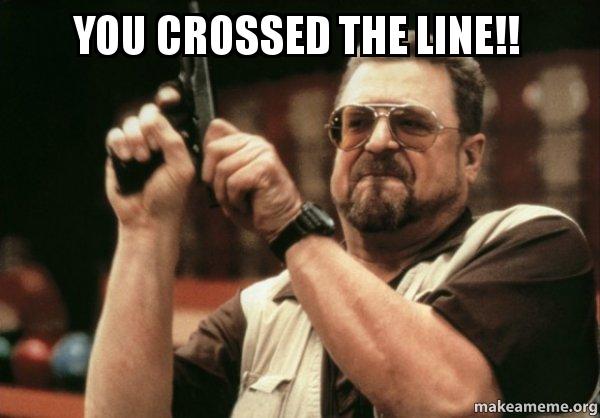
But for 99% of what you shoot, the 180 degree line is going to serve as a tool, not an artistic choice. To get to the heart of your story as effectively as possible, make sure your audience is focused on the right thing, and don’t cross the line!
(Screenshot from The Big Lebowski via makeameme.org)
One of the biggest issues I faced in college was coming up with ideas for scripts. Without too much self-pity, I have to admit that it’s difficult for college students to write a decent script. For one thing, they simply don’t have enough life experience. Production issues create another major problem. While film students may have brilliant ideas (probably not, but maybe), they don’t usually have the means to produce them. You can only shoot a dorm room from so many angles. Something that really would have helped and that I recommend all young writers do is find their muse.
The Muse
In classical Greek mythology, the Muses were goddesses (or nymphs) who flitted down from the ether and whispered ideas to artists. The Greeks (who were also ridiculously chauvinistic) believed that there was a pure, objective form of beauty and that the Muses themselves embodied it. Naturally, this is what the artists used as inspiration for their work.
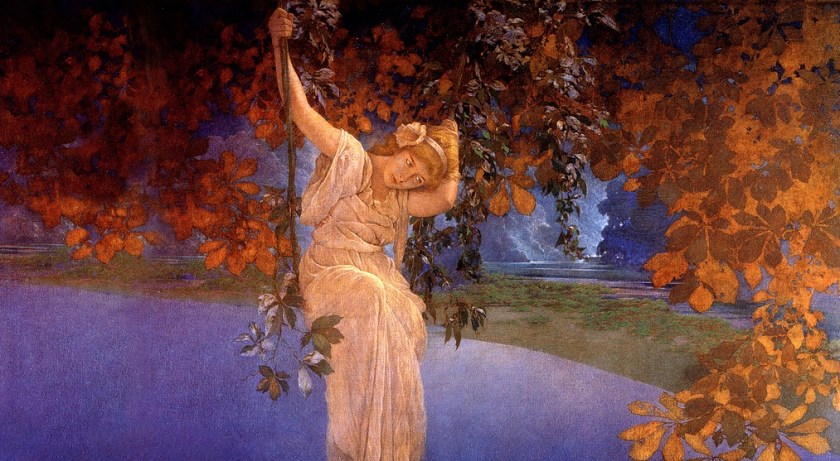
In subsequent drama, the muses are often portrayed as beautiful women whom tortured artists obsess over. In an amazing example of life imitating art imitating life, Maxfield Parrish, who had a major influence on the look of fantasy in the early Twentieth Century, fell in love with his model, Susan Lewin. But when his wife died and he didn’t marry Lewin, she went off and married someone from her home town (at the age of 71!). Parrish never painted again.
(Who would think the guy that painted this would have relationship drama?)
But your inspiration needn’t be a woman. (In fact it’s probably better if it’s not.) Nature may be your inspiration. Or music. Or old literature. Or Irish folktales. Or history. Or true crime. Or you may even just jot ideas down and pull them out of a hat like Mad Libs. I, strangely enough, stumbled on NPR.
To be clear, I’m not necessarily talking about the news broadcast. But NPR does a lot of in-depth reporting about human-interest stories, technology, and even book reviews. And delving deeper into these subjects often tickles my brain. How will this technology change the world in ten years? Why was this peculiar law written in the first place? How would this news story unravel differently if the gender roles were reversed? I stash away all of these ideas, characters, and psychological puzzles, and I let them simmer until they coalesce into my next idea.
Hey, that was my idea!
If you’ve read my posts about copyright, you hopefully have a handle on how to protect your work. But what do you do when you’re sitting in a theater and see a preview that seems an awful lot like that script you’ve been working on for years? Well, sadly, probably nothing.
One theory of creativity questions whether we can ever come up with an original idea or merely recombine things we have already experienced.
Even if you don’t fully agree with that theory, it’s not hard to see that the zeitgeist, the “spirit” or “attitude” that’s driving societal trends, will have a major influence on what artists create. Something happens and then BAM, eighteen months later, you’re inundated with scripts that are all about the same thing.
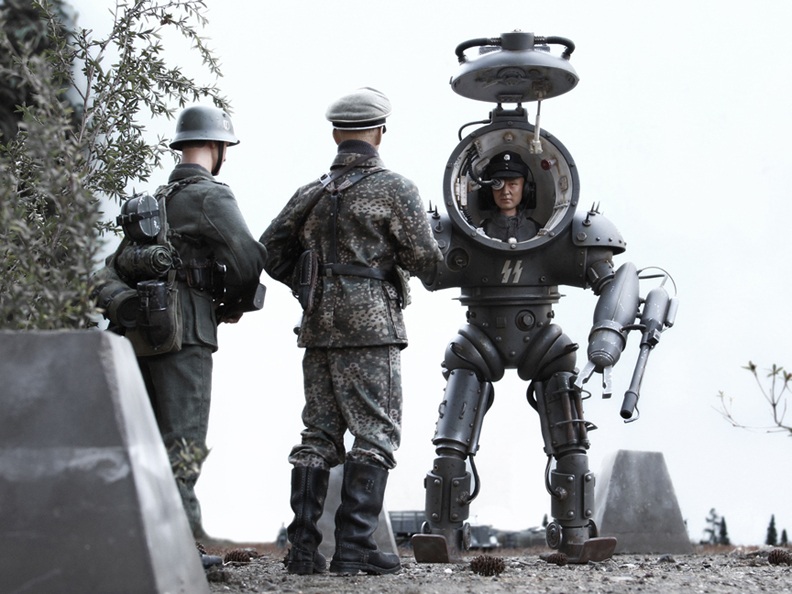
When I started covering scripts years ago, I read three scripts in one month that tried to tackle Die Glocke. It was a supposed Nazi time travelling machine that crashed outside Pittsburg in the 1960s. The scripts were all very distinct from each other. None of them had the same characters or general plot outline so none of them infringed on the other’s copyright. Sadly, none of them were very good, either. But it did have me wondering where the sudden interest in Die Glocke originated. (Sidebar, I’d stay away from moon Nazis, time travelling Nazis, and really any sci-fi Nazis when you’re writing.)
This wasn’t the first time I’d noticed the phenomenon, either. 1995 brought us Braveheart and Rob Roy, true stories about Scots fighting the English for independence. Then there was 1998 with it’s hyper-realistic World War II epics Saving Private Ryan and The Thin Red Line. Okay, sure, lots of war movies come out every year, but 1998 also brought Deep Impact and Armageddon as well as Antz and A Bug’s Life. True, especially in the last case, studios may be intentionally trying to steal market share from their competitors. But scripts don’t materialize overnight. The inspiration for the stories, the drive to produce the stories, and the technology required to make the films all coalesced independent of one another, but at the same time. (Wikipedia actually has a page dedicated to so-called “Twin Films.”)
(Maybe we’d all be better off if one of these had been a documentary. Image via another fun article here.)
I’ve had to kick myself more than once for coming up with an idea, but getting beaten to the punch. (Not to say that my ideas, sketched out in a journal, would be as good as or even similar to the works that came out later.) In December of 2008, I made a note that I should write a dark comedy about cancer. I even wrote that “The Big C” would make a good title. In August of 2010, Showtime premiered The Big C. (Too bad you can’t copyright titles.) In April of 2013, I started jotting down notes for a TV series about pirates. It just felt like the time was right. Apparently, I wasn’t the only one. A few weeks later, watching previews before The Great Gatsby, I saw a trailer for the Starz series Black Sails. You can ask my wife, I nearly threw a shoe at the screen. In March of 2006, I scribbled down something about a love story for a musical I was brainstorming. It was about Aaron Burr…the man who shot Alexander Hamilton.
There is a silver lining to all of this. At least I can say with confidence that my ideas are not totally off the mark. In fact, they’re not even off the market. You can’t copyright cancer or pirates or American history. So long as my expression of these topics is different than the others, I’m still good to go. Furthermore, when pitching my own version of the famous Burr/Hamilton duel, I can use the success of Hamilton to entice investors. Of course, I have to be careful not to use any of the fictionalized characters, dialogue, or other original plot devices that the brilliant Lin Manuel Miranda used.
Should you watch movies that are similar to your idea? Of course. Everyone else is. If you pitch an idea about a theme park full of cloned dinosaurs to an investor, you better be able to explain how it’s different than Jurassic Park and why it’s worthy of their money. Watching similar projects will also inform you about what works and doesn’t work for a particular genre or story. It may even spawn another, better idea. Don’t be afraid that watching similar work will influence what you’re writing. It will. But if your project is so similar that it risks copyright infringement, you should probably quit while you’re ahead.
Obviously, if you have legitimate reasons to believe that someone stole your “original work of authorship” that was “fixed in a tangible form,” you should fight for your rights. But my bigger point about the zeitgeist is, don’t get too paranoid.
Keep Writing
The biggest way to get over your slump is simply to keep writing. This is what you want to do, right? It’s very unlikely that you’ll come up with and execute an original idea perfectly on your first go. If you trust yourself as a writer, you’ll just get back to work with your next great idea and hopefully hit the market before the next guy. I’ve also noticed another peculiar phenomenon.
Ideas beget ideas. You’ll be in the midst of doing research for some project and suddenly get hit with another brilliant premise. Or you’ll finish a project just to realize it’s complete trash, but that one minor character you created is pretty cool and maybe, just maybe, deserves their own story. The muse can come from anywhere. You may also discover that your billion dollar idea that was going to make all of your dreams come true is just a massive pain in the neck. You might not be able to look at it for ten more seconds without vomiting. That’s okay. It may be a good idea (maybe not), but it’s not going to be your idea. And maybe, just maybe writing period educational pieces for children isn’t what your destined to do. The only way to find out is to try it and follow that muse wherever she or he or it leads you.
If you didn’t get enough of it last time, here are some more fun facts about copyrights! For example, did you know that like being a Scientologist or owning a gun, copyright is protected under the United States Constitution (Article 1 Section 8)? Or that Walt Disney successfully lobbied to extend copyright protections to their current length in order to preserve its copyright on Mickey Mouse. Seriously, you can’t make this stuff up.
Copyrights Never Die. They Just Pass into Public Domain
Seventy years after you die, all of your work will pass into the public domain or PD as they say. Public Domain means we the people now own your work and can do whatever we want with it for free. This is great for filmmakers who want to do a spinoff sequel to Hamlet or use Beethoven’s Moonlight Sonata in their soundtrack. But be forewarned, while Beethoven’s music is PD, specific recordings of the Moonlight Sonata are copyrighted by the person who recorded them. You’ll have to make your own recording of Beethoven’s music.
Interestingly, too, while you can make an adaptation or derivative work from something in the public domain, you can’t use any elements from other derivative works that are still copyrighted. The Wizard of Oz is a great case study. The original L. Frank Baum works are public domain, but the 1939 Warner Bros. movie is not. What’s the difference? For one thing, L. Frank Baum does not describe the Wicked Witch of the West as green. So when Disney made its Oz the Great and Powerful a few years ago, they had to be careful not to use Warner Brothers copyrighted shade of green. Read more about The Wizard of Oz copyright here.
(Sidebar, my first job in television was securing music rights for a high school band concert. We needed separate rights to broadcast the music and rights to synchronize the music to the televised concert.)
Fair Use
Fair use allows you to use part of copyrighted works for specific, limited purposes. Courts generally consider four criteria in fair use litigation.
1) Nature of the use. Educational and informational purposes are generally permitted while commercial purposes are generally not. Since I run a free, educational blog, I’m not too concerned about including a copyrighted image in a post to help illustrate a point. (That being said, if you own the copyright and were not credited or don’t want to be associated with my blog, I’ll gladly remedy the situation.)
2) Nature of the copyrighted work. While audio and video recordings may be copyrighted, audio and video recordings of newsworthy events (facts), may not be copyrighted. Time magazine, for example, tried to purchase the rights to the Zapruder film–the assassination of President Kennedy. But as a matter of fact and public record, the court decided the film should be in the public domain.
3) Amount of the copyrighted work. Screening the first scene of Saving Private Ryan to educate film students on a particular cinematography technique is probably okay. Screening all of Saving Private Ryan to a packed theater, not so much.
4) Damages. Of course, all of this comes down to money. If you start selling pirated Game of Thrones DVDs or Game of Thrones themed T-shirts, you’re taking money out of HBO’s pocket. But if you reprint a promotional picture for educational or news stories, you’re probably okay.
4B) Parody. But wait there’s more! One dicey way that you can ride off of the success of copyrighted work is parody. That’s how we end up with all of those porn parody gems. The key here is that your new copyrighted work is parodying a specific other work, but not infringing on the same market. That is to say, people who want to watch the adventures of Jack Sparrow will not intentionally purchase Pirates XXX.
Intellectual property rights are largely covered in three categories: copyrights, trademarks (which I mentioned briefly in the previous post), and patents. Patents are distinct from copyrights in that copyrights protect “fixed works of authorship.” Patents protect processes. If you make the world’s first 5D film, you can copyright the film. But you’ll want to patent the process for making all future 5D films.
Copywriting
Copywriting is different than copyrighting. Writers may work on copy (text) for advertisements or articles. That’s called writing copy. And while copywriting may be copyrighted, make sure you’re using the right copy when writing copy about copyrights.
More fun with copyrights
Phew! That was exhausting. But the fun’s not over. www.copyright.gov actually does a really good job explaining copyrights. I highly recommend checking it out if you have questions. In the mean time, get out there all of you creative people and fix some original work in a tangible form!
I’ve had a wide range of bizarre and usually misinformed conversations with people about copyrights. Having just copyrighted my most recent script, I thought maybe I should write a post about it. As with other posts that get into legal matters, this is merely meant as a guide and a primer. If you need legal help with copyrights, please consult a lawyer.
Intellectual Property Rights
Owning physical property, like real estate, is pretty straightforward. There’s only one property at 123 Fake Street in Springfield, California. I can’t be enjoying the ocean breezes of 123 Fake Street in California if I am freezing my butt off in Ontario. But what about something a little less concrete? What about “intellectual property?”
You may have a hardcopy collector’s edition of The Hunger Games trilogy sitting on your shelf in California. I may be huddling with a secondhand, tattered paperback edition in Ontario. But we are both able to enjoy (or slog through) the series at the same time. Why? While the book is a physical piece of property, the story is intellectual property. Its main value isn’t derived by owning the actual book.
Lots of things are intellectual property: books, poems, screenplays, computer code, movies, music, choreography, architecture, photographs, paintings, and sculptures just to name a few. Ownership in these cases has less to do with the physical object than the idea. Catniss Everdeen isn’t real. She’s an idea. You can’t water your garden with The Rain Song. It’s an idea. And you can’t smoke tobacco in The Treachery of Images. It’s an idea (not a pipe!).
In all of these cases, the original manuscript or recording or painting becomes worth less as more and more copies are made. If I can download The Rain Song to my computer, I don’t need to hunt down Robert Plant to hear him sing it. The real value in intellectual property is being able to produce (and sell) copies or as those of us in the know call it… holding the copyright.
What is a Copyright?
Straight from www.copyright.gov “Copyright is a form of protection provided by the laws of the United States to the authors of ‘original works of authorship’ that are fixed in a tangible form of expression.” (Well, that was easy.)
Original
It may seem obvious, but copyrights are only allowed for unique works. If I write a screenplay about a modern day theme park full of dinosaurs created out of fossilized mosquito blood, it would be hard for me to argue that I wasn’t somewhat influenced by Jurassic Park. This flip side of this, however, is that copyrights do cover derivative works. Once you invent Jurassic Park or a Galaxy Far, Far Away, or The X-Men, all the spinoffs and sequels are still protected by that first copyright. That’s why movie studios are so interested in “intellectual properties” or IPs, as they say. You can make endless sequels merely by purchasing that first copyright. You can also see how well that initial IP did (say the New York Times bestseller The Girl on the Train) before you spend a lot of money turning it into a movie.
Curiously, some things—titles in particular—are too short to be deemed “original” and can’t be copyrighted. Otherwise, someone would just start smashing words together and copyright every title imaginable. Brand specific words like lightsaber or frappuccino, however, can be trademarked, another form of intellectual property protection. That’s how you know the Halloween store’s “Pubescent Frog of Silent War” isn’t official Teenage Mutant Ninja Turtles merchandise.
Interestingly, you cannot copyright facts, either. Something that is known to have happened is simply a fact. World War I happened. Archduke Franz Ferdinand was assassinated. The Allies won. And any information published about that is now public knowledge. So why have you heard about companies purchasing “life rights?”
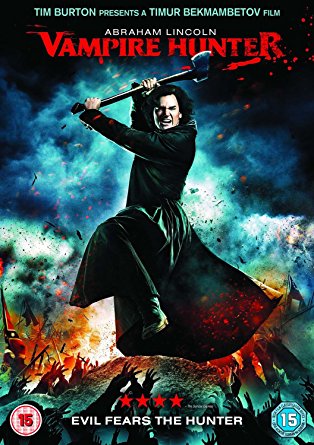
Life rights give the purchaser access to additional information from the subject (a diary, for example), which may not be public knowledge. It also protects the purchaser from being sued for defamation. You can’t sue me for defamation if I gave you the rights to publish my story. You really don’t need life rights for public figures (who have a lot of facts floating around about them), dead people (who can’t sue you for defamation), and dead public figures (who are pretty helpless). Want to claim Abraham Lincoln was a vampire hunter? You’re gonna be A-okay.
This is probably the part where people get most confused. While we’ve been talking about “intellectual property” and ideas, you can only copyright something once it is in a tangible form. You may have a great idea for a Nazis on the moon script, but until you write it down, or film it, or carve the plot into stone, you don’t actually have the copyright for it. Your idea must somehow be fixed—permanently and irrevocably set—into some kind of physical medium.
Could someone overhear you talking excitedly about your “brilliant” Nazis on the moon script, jot everything down on a napkin, and steal that copyright from you? Yes, they could. It would be unethical, but it wouldn’t be illegal.
Another way people describe this is that copyrights don’t actually protect ideas, merely the expression of an idea. Nazis on the moon is an (intriguing and ridiculous) idea. That scribble on the napkin is the “expression” of that idea. It is “fixed in a tangible form.” Now if you don’t have time to “fix” your Nazis on the moon idea by writing the screenplay, you could perhaps write a short story or a treatment and copyright that before you start talking about your idea in public. Then at least the basics of your story and the characters are satisfactorily “fixed.”
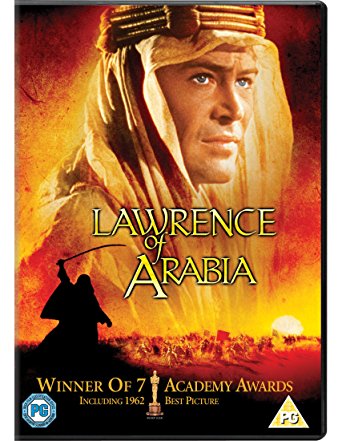
And to backtrack briefly, while you cannot copyright a fact, e.g. World War I, you can copyright the original expression of those facts, e.g. The Guns of August or Lawrence of Arabia.
The good news is, as soon as you fix your original work of authorship in a tangible form, it is copyrighted. As the author of the work, you have the exclusive rights to copy, sell, distribute, or create derivate works from it. You also have the right to prevent anyone else from doing the same thing. Things start to get weird when someone else tries to claim credit for your work, which is why it’s highly recommended that you register your copyright.
It’s extremely easy and cheap. Simply go to www.copyright.gov, follow the prompts and voila. The United States government has a record of your creation! The only downside is (being the government) they often take a while to get back to you.
If you’re in a hurry, you can register your screenplay with the Writer’s Guild of America. WGA West if you’re west of the Mississippi, WGA East if you’re east of the Mississippi. This is slightly cheaper and must faster, but they apparently destroy all of their files after a few years, so you have to keep renewing it.
I’ve also read about the “poor man’s copyright” several times. Basically, you mail a copy of your script to yourself and leave it sealed, using the Post Office’s postmark date as proof of when you fixed your original work in a tangible form. It is not a substitute for registering your work with the copyright office and according to Snopes, has never actually been tested in court. So in the U.S. at least, you’re better off just registering your work.
That gives you some basics about copyrighting your scripts. Next time, I’ll cover some of the other interesting copyright situations you may find yourself in as a filmmaker. Copy that? Over and out.
When all of the credits fly by at the end of a movie, “grip” tops the list of titles that keep people scratching their heads. What is a grip? What does a grip do? (Insert any number of punch lines here.) Grips have a wide range of responsibilities on set. Most of them involve lifting heavy things (sand bags, steel pipe, stands, cameras, plywood, lights, weights…) so these are some of the toughest guys you’ll see on set. But gripping also requires a lot of problem solving and smart working (How do you minimize the amount of heavy things you have to lift?) so grips also need to be well versed in film equipment, knot tying, construction, and physics. When there’s a twenty pound light swaying in the breeze above your actor’s head, you want to be sure the guy that put it there knows what he’s doing. So what exactly is a grip?
Gripping
Gripping is essentially attaching things to other things: attaching a camera to a dolly, a clamp to a pipe, a flag to a stand, a stand to a condor, or, like in this picture below, attaching some transmitters to a Ferrari.
Although it’s a little hard to see, the camera is on the left of the car, outside the driver’s window on what’s called a “hostess tray.” The grips are using speed rail and short arms to secure it. Look at that nice sturdy triangle they’re building!
Grips use a wide variety of clamps, special film equipment (Cardellinis, cheeseboros, apple boxes, elephant ears, ducks bills, etc.), rope, ratchet straps, screws, and tape to make this happen. Of course, you want to be sure you’re using a nice soft suction cup (not a screw gun) on the Ferrari. You’ll also need to be sure the suction cup is strong enough. How heavy is the transmitter? How much wind resistance will it create? How fast is the car going? Some jobs require impromptu carpentry, building platforms for gear or people.
Once the gear is set, it also needs to be secured with ropes or safety chains. Anything that creates a lever needs to be counterbalanced with weights. Stands need to be weighed down with sandbags. And that brings us to the grip department’s second, but perhaps more important job.
Safety
Because of all of the heavy things grips schlep around, they’re in charge of safety on set. Obviously they need to make sure all of the lights and cameras are safe. (Will the camera fly off that Ferrari and hit someone? What about the antennas on the transmitter? How secure are they? Did someone remember to remove the tape rolls from the hostess tray?) But because of that, they take on a broader safety roll.
Are there fire extinguishers and fire lanes on your set? Is it too windy for the camera operator to go on the roof? Is the road closed to traffic? Does everyone working on the boat have a life vest? And while different people have different responsibilities when it comes to safety, it’s ultimately up to the key grip (the head of the grip department) to make sure you have a safe film set. And if he says, “That’s unsafe, we’re not doing it,” well, that’s that.
Removing Light
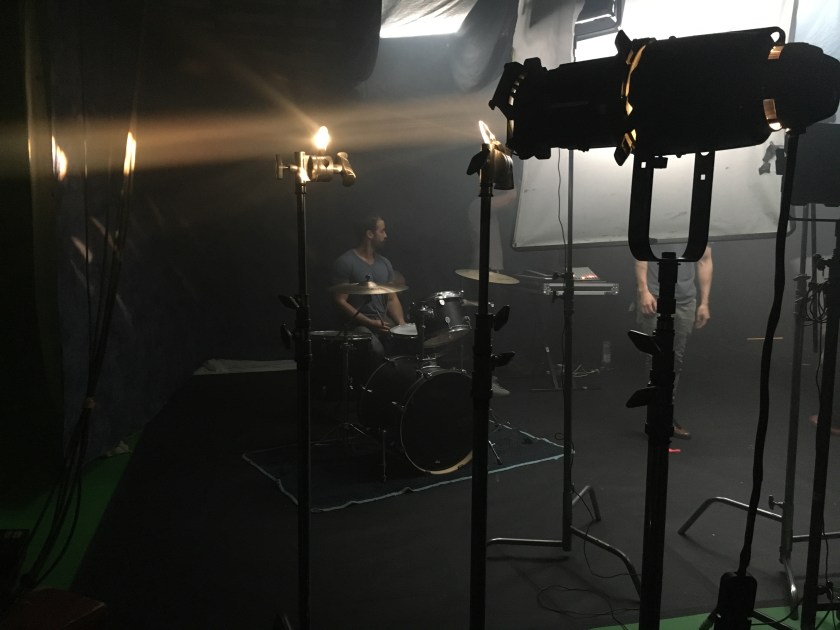
A grip once explained his job to me this way. The electric department adds light. We take it away. Apart from all of the other things grips are responsible for, they also use a wide variety of flags, nets, and diffusion to control the light the electric department throws around on set. When you see behind the scenes photos, that’s what all of the random stands are for.
Grips are extra busy on outdoor shoots. When you’re on a set, the electric department shows some restraint in adding light. Cable is pretty heavy, after all. The sun? Not so much. Here’s a “flyswatter.”
We started filming a scene in a cloudy parking lot, but had several days of work. Eventually the sun came out. No worries, grip department to the rescue. The flyswatter is your custom built, movable cloud. (The “boom lift” or “JLG” brand name lift that the flyswatter is attached to is commonly called a “condor” on film sets.)
Moving the Camera
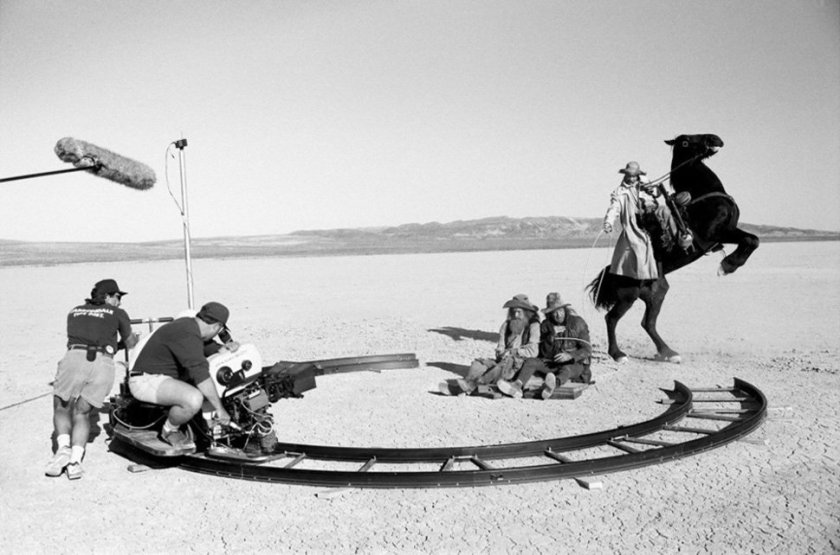
Grips are also the only people who aren’t in the camera department that can actually control a shot. While the camera operator is in charge of panning and tilting, the dolly grip pushes the dolly that the camera is sitting on. It’s up to him (or her, I know some great dolly grips who are women) to get the speed right. In the below photo, the dolly grip is on the far left, pushing the camera.
On the last feature I worked on, I had the good fortune to work with the rigging grips. We would show up before the shooting crew to set up larger rigging projects that may take hours or days to finish. The flyswatter was one of our projects. Here is another.
The electric department placed several lights on the condor. We built the box around them out of speed rail (1.5 inch diameter aluminum pipe). Although steel is stronger, you don’t want to put all of that weight eighty feet in the air. We ultimately covered the frame with blackout cloth and put diffusion on the front creating a very large, very powerful spotlight.
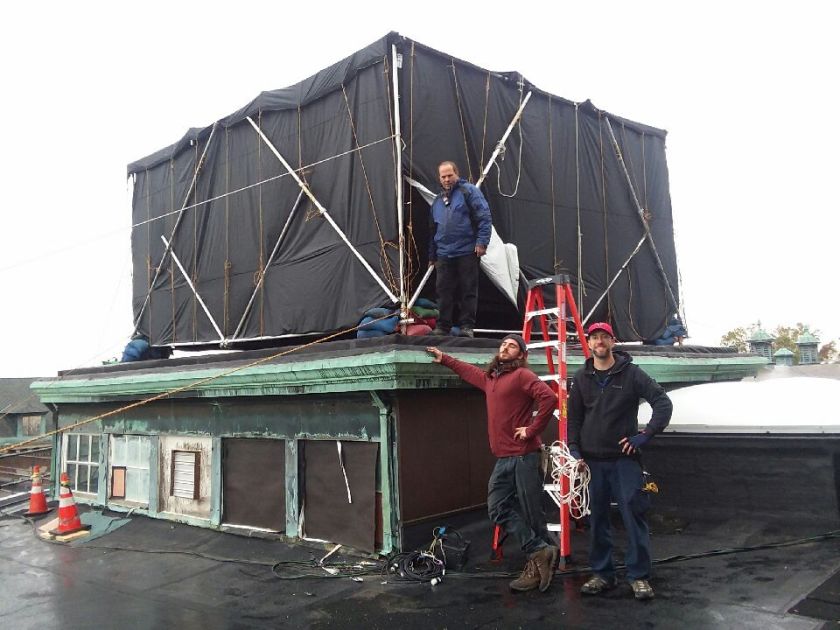
Film crews often black out windows so they can control the quality of light, no matter what time of day it is. Here is a tent we built over a sunroof. First the frame, then with the sides.
Wind was a major concern. You can see the copious number of sandbags weighing down the corners as well as the hemp safety lines.
Another fun project was blacking out or tenting the entire side of a building. Here’s a time lapse of us removing the tents after the location had been wrapped. For perspective, each of those pipes is twenty feet high.
Another fun project was building this scaffolding on the stage. We used it to throw stuntmen out of a third story window.
Here’s the same scaffolding after we covered it with green fabric. That allows the visual effects department to match it to the actual location even though we filmed it in a studio.
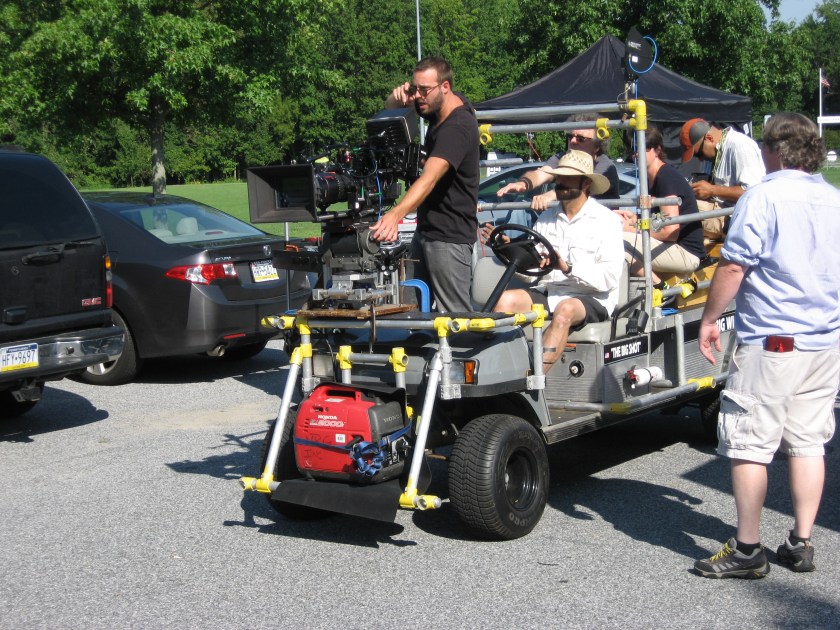
Here’s an electric car known as the “big rig.”
In the first photo, you can see the camera with the camera operator, key grip (driving), and support crew in the back. There’s also a generator on the front to power all of the gear for the support crew. The grip department built all of the speed rail and secured all of the gear to the big rig.
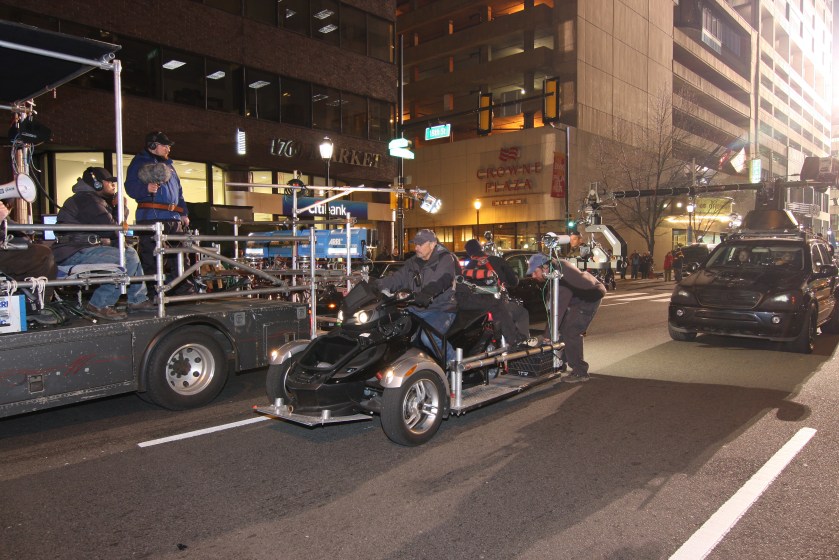
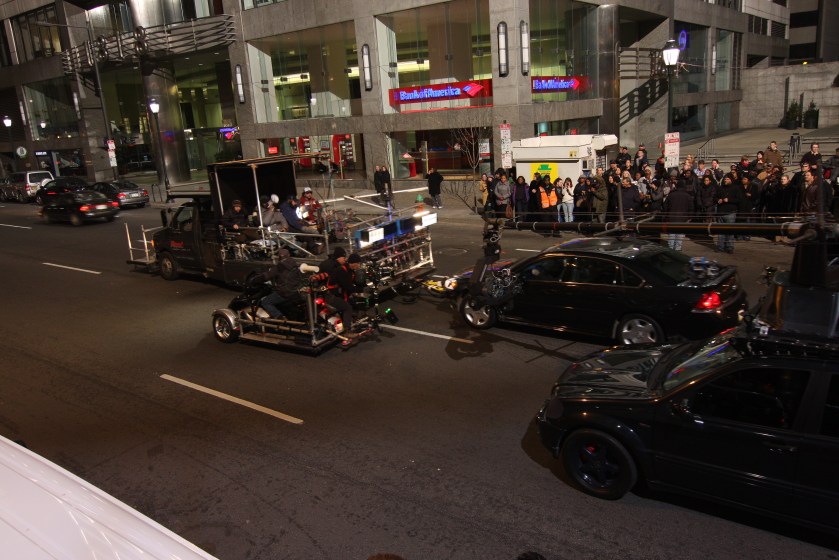
Here’s another fancy car setup for filming vehicles racing down the road.
One camera is on the tricycle. Another was on a crane known as the “Russian Arm.” In the first photo, the Russian Arm is the car on the right. The arm is extending to the left with the camera hanging down. In the second, the Russian Arm is the furthest vehicle to the right, the arm extending in front of it with the camera near the sedan’s driver side window.
The director and the support crew sat on the back of the pickup truck. The truck lights the driver and passenger for the scene and pulls the sedan. Again, these vehicles show up to set completely empty. All of the “gak” (that’s a technical term for stuff) was secured in place by the grip department. That’s some serious gripping.
So the next time you want to build a pretty awesome looking fort, blot out the sun, or safely race around the street on the back of a truck, get a grip.

























 (Image via:









 (Who would think the guy that painted this would have relationship drama?)


 (Coincidence?! Image via










 Vargoing