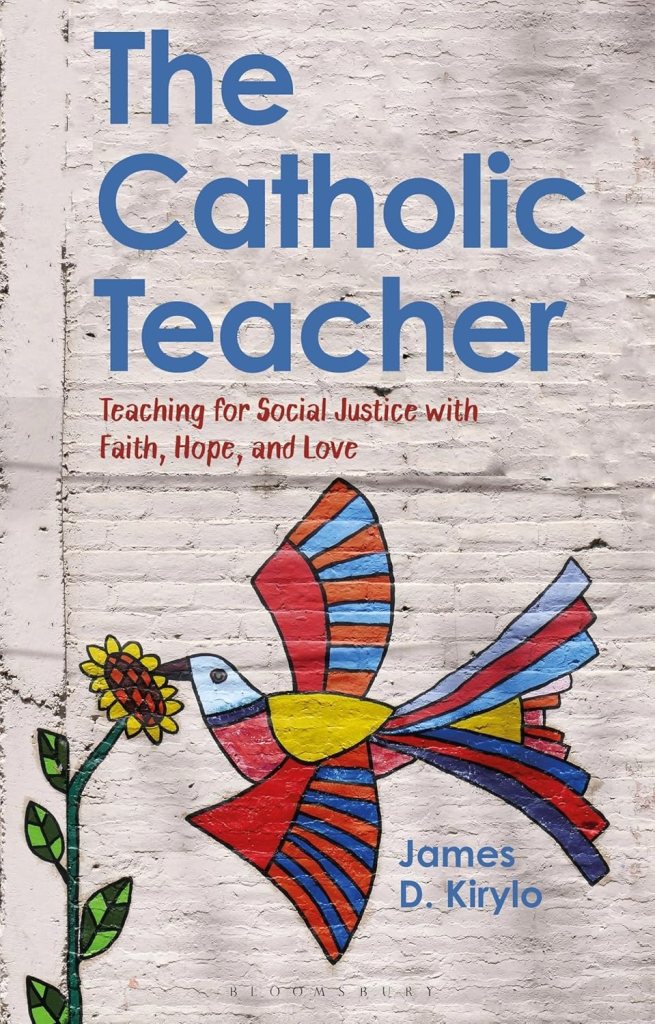
The school year has started, and a major election is less than two months away. Personally, I’ve been wrestling with how to address politics in my class. There are numerous, highly polarized issues that directly affect my students: gun violence, student loans, immigration, even a proposal to eliminate the Department of Education. These contentious issues can seep into classroom discussions and erode the trust necessary to create fruitful discussions and a safe learning environment. Looking for actionable suggestions, I turned to James D. Kirylo’s recently published The Catholic Teacher: Teaching for Social Justice with Faith, Hope, and Love. Sporting an encouraging title and cover art, including chapters on COVID discourse, guns, “the sacredness of life” (i.e. abortion), and climate change, the book appears like it will be a good starting point for difficult conversations. Unfortunately, it aspires to more than it achieves.
Kirylo’s main argument is that educators not only can—but have a moral obligation—to use their faith to guide their teaching. Doing so, however, ought to be dialogic, not didactive. Kirylo writes that his book is meant to be “ecumenical, interfaith, and interreligious in tone. In that way, perhaps the text will be appealing to Catholics and non-Catholics alike” (1). He uses the next few chapters to establish a Catholic tradition of ecumenicalism, but here things quickly unravel. Kirylo’s optimistic tone lacks awareness of the complexity of the issues he discusses and even, in some cases, the Catholic Church’s complicity in these issues. This lack of self-awareness is illustrated well when Kirylo quotes Nostra Aetate. “Since in the course of centuries not a few quarrels and hostiles have arisen between Christians and Moslems, this sacred synod urges all to forget the past” (21). While it’s a nice sentiment, it ignores reality of teaching in a classroom today that likely includes Jewish, Muslim, and Christian students whose lives are being affected by antisemitism, Islamophobia, a war in Gaza, and white Christian nationalism. Taken in this light, Kirylo’s calls for ecumenicalism ring as hollow as Nostra Aetate’s urge to “forget the past.” Instead of a serious proposal to open a dialogue about contentious topics in a pluralistic classroom, Kirylo seems to have a much narrower focus. He’s targeting practicing Catholics who are either unsure if they should take a stance on contentious topics in the classroom or want to take a stance but do not feel as though they have a mandate to do so. While this is a laudable endeavor, it’s a significantly narrower audience and purpose than Kirylo’s hopes stated in the introduction.
Once you realize this narrower purpose, Kirylo’s calls for ecumenicalism feel strangely hypocritical. The first two sections (nearly half of the book) lay a foundation for his purpose in Catholic theology and tradition. While this history lesson may motivate practicing Catholics to imitate their forebearers, it fails to invite other people into the conversation. In other words, if the reader is not swayed by the arguments of Catholic synods and encyclicals, Sections I and II lack any real merit. Section III of the book finally looks at the contentious issues in question. But as the shortest part of the book, Section III lacks the research and thoroughness of the first two sections, simply stating cliched positions on tired issues. Little effort is made to share alternate views, and Kirylo offers no suggestions on how to discuss these issues with people who hold differing positions. And again, Kirylo either misses or ignores what actually makes these topics contentious.
In the case of abortion, for example, Kirylo directly mentions Catholicism’s outgrowth from Jewish theology without acknowledging that the majority of Jewish branches do not consider life to begin at conception (NCJW, Genet). Even his tepid dismissal of contemporary Jewish theology, “There is not a monolithic Jewish point of view” (93), acknowledges that there are a multiplicity of views. How then, should the Catholic educator engage with students whose views disagree and who want to retain their civil rights of bodily autonomy during a political era that seeks to take them away (Guttmacher)?
Then there’s the very germane question of school funding, something that would directly affect Kirylo’s audience no matter how narrow it is. Here Kirylo critiques “neoliberalism” for its efforts to defund “public K-12 education” (69) while ignoring the fact that many Catholics and even the United States Conference of Catholic Bishops push for voucher programs that would remove money and students from the supremely inclusive and democratic public education system.
It’s this blindness or outright disingenuousness that frustrates me the most about Kirylo’s work. While I do believe that his narrow purpose of empowering Catholic teachers is genuine, the lack of critical thought and introspection results in more of a propaganda piece than an insightful work for teaching in a pluralistic, multicultural classroom. Maybe that’s not Kirylo’s fault. Maybe my expectations for the book were too high. Whatever the case, if you’re looking for something to help you with these difficult conversations over the next two months, you’re going to have to look elsewhere.
P.S. For someone who handles difficult conversations well, I recommend Emmanuel Acho’s work.
Photo manipulation is nothing new, and for anyone growing up in the digital age, Photoshop has morphed from a proprietary digital editing program into a verb. Taking it a step further, Google Pixel’s Magic Editor puts Photoshopping right into the palm of your hand. The smartphone app allows you to move, resize, or even delete items from an image. Not happy with what your camera captures in the first place? Canva, Dall-E, Firefly, and other software lets you conjure up any image you can verbalize. Don’t feel encumbered by your lack or experience or, for that matter, reality. We used to say, “It’s only true if there’s pictures.” That’s certainly not the case any more. But was it ever?
In the commercial and theatrical world, professional filmmakers intentionally alter reality. They use all kinds of tricks to make things intimidating, pretty, ugly, or endearing. Makeup, costumes, and lighting turn a perfectly charming Emilia Clarke into the Mother of Dragons.
But these tricks are still in play even if you don’t use them intentionally. Here are two pictures of a friend of mine at a mud run.
In the first, you can clearly see the falling rain. (No, those aren’t orbs…) In the second, you can see that it is still raining if you look at the water. But the change of angle and focal length means you can no longer see the falling rain. (This is the same reason why it sometimes looks like it’s barely sprinkling at rained out sporting events.) I didn’t hide the rain intentionally, but that’s the reality of the situation.
The important thing to remember is, consciously or not, all media is an interpretation of reality. When you’re on vacation and take a picture, it captures some part of the moment, but it isn’t a recreation of the moment. You’re limited by the abilities of your camera. You choose to photograph the Grand Canyon not the parking lot next to the Grand Canyon. You crop out the guy wearing that ridiculous Hawaiian shirt. And what about the people in your photo? Are they like my nephew, who for two years refused to smile any time someone pointed a camera at him? Or do they ham it up for the camera in the hopes of becoming an internet star?
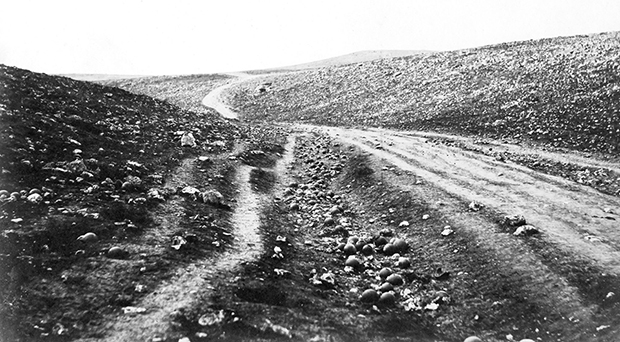
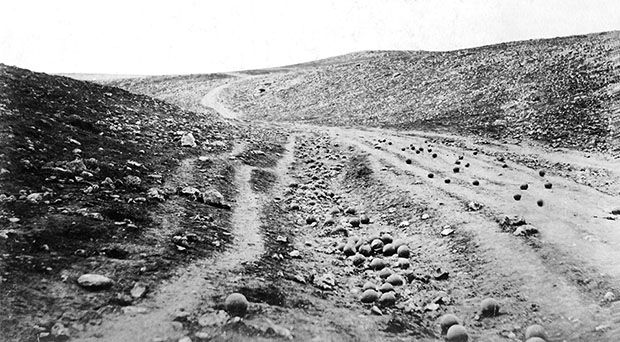
This is nothing new. Film has been an interpretive art since its inception. Below are two of the earliest war photographs ever taken. These are from the Crimean War in 1855, twenty-three years before the first movie was made.
Both show a scene of desolation strewn with cannonballs. But it’s the second one that would make photographer Roger Fenton famous. Simply put, it’s a more striking photograph. Fenton wanted to show the horror and destruction of war, but he was restricted by his cumbersome film equipment. His solution? Move the cannonballs onto the road to take advantage of the high contrast. Although it was much more labor intensive than Photoshop, it’s the same basic principle. He altered his photo for effect. He sought a deeper “Truth” that wasn’t reflected in “reality.”
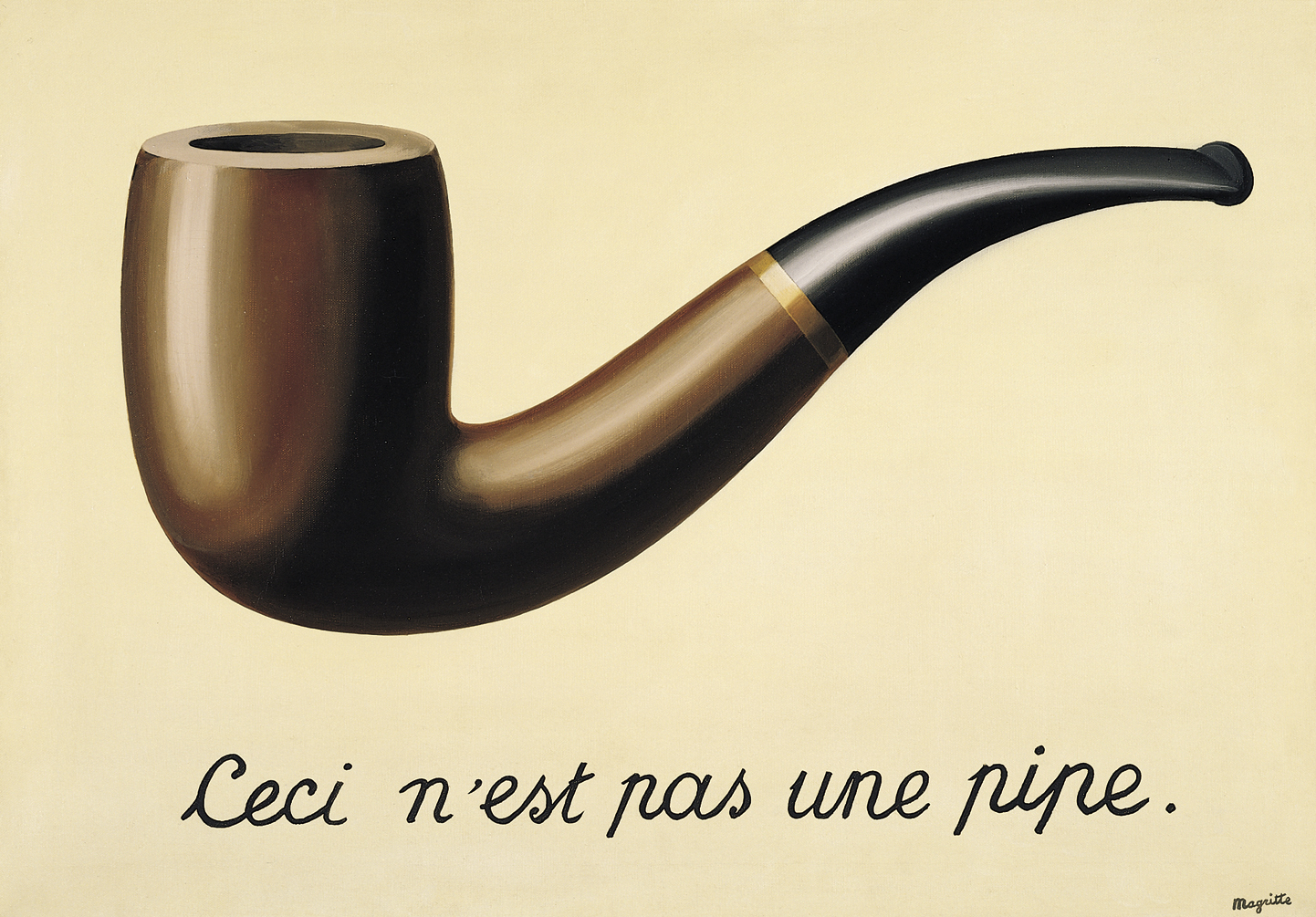
In the late 1920s, surrealist painter Rene Magritte created this thoughtful painting called “The Treachery of Images.”
If you don’t know French, the text reads, “This is not a pipe.” Of course it’s not a pipe. It’s a painting. It represents a pipe. Our brains conceive of it as a pipe, but it is not a pipe. The same holds true for all media.
A definition might be helpful here. Media is the plural of medium. The two definitions that come to mind are medium (size), as in the size between small and large and medium (fortune teller), as in someone who communicates between the living and the dead. Both contemporary definitions share the same Latin route, medias, which simply means middle. It shouldn’t surprise you that our news sources are generally referred to as “the media.” They are the middlemen. They transport ideas from the source to us. But along the way, they must interpret it.
Media is also used in the art world to describe the material that an artist uses. You may see the phrase “mixed media on canvas.” This medium might be oil paint, latex paint, clay, canvas, silk, steel, analog audio recording, digital video recording, computer programs, or even food. The point is, the artist interprets the world through this medium. Film, as an artistic endeavor, is its own medium. But never forget that the six o’clock news, the news radio traffic report, and the Wall Street Journal all operate in artistic mediums. To explain in more detail, I’d recommend listening to Malcolm Galdwell’s Revisionist History podcast from a 2017.
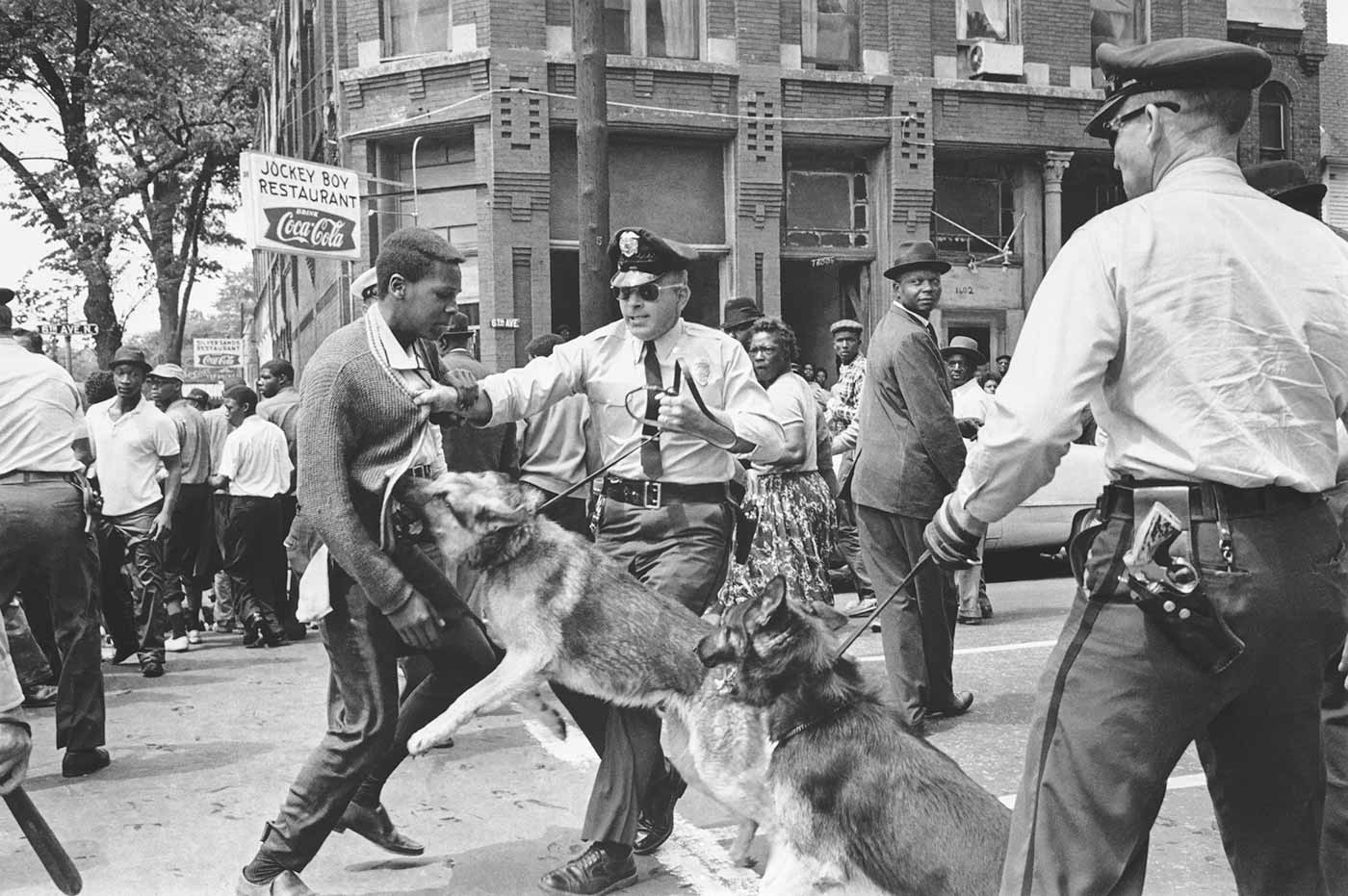
In it, he discusses this famous photograph from Birmingham in 1963.
It seems to show a police officer unleashing his dog on a black protester. But it doesn’t. The man in the photograph wasn’t part of the protest. He wasn’t a “Foot soldier,” as the Civil Rights activists called themselves. And the police officer hadn’t unleashed his dog on him. If you look closely, both men seem surprised and the police officer is leaning back, trying to pull the dog away. But that’s not what the nation saw.
This photo highlighted the brutality of the Jim Crowe south. It represented the discrimination, the institutionalized hate, and the lynchings. It shifted public opinion to the side of the Civil Rights movement, and it was all done on purpose. Bill Hudson, the photographer, chose this picture over the hundreds of other photos he had taken that day. The editor of The New York Times chose to put this story above the fold rather than any other news of the day. This is what a medium does. It takes the raw data, curates it, interprets it, and disseminates a cohesive message. In doing so, a medium must disregard data that fails to support its message or obfuscate its position. In its quest for “Truth,” it must necessarily deviate from “reality.”
To further clarify, look at Ronald S. McDowell’s statue inspired by Bill Hudson’s photograph.
The figure representing Walter Gadsen, the student, is considerably younger and shorter than he was in reality. The police officer is emotionless and inhuman, reminiscent of T-1000 from Terminator 2: Judgment Day, which came out four years before the sculpture was dedicated. The police dog’s mouth is wide open, bearing vicious, anatomically improbable fangs. But remember this is a piece of art. This is not a pipe.
The push and pull between film as art and film as documentation will never end. But as a filmmaker and consumer of media, it’s important to acknowledge that film is a medium. It is not reality. There is no magic bullet, no enforceable code of conduct, no ten commandments of filmmaking that will ever make film purely objective. Reality is reality. Film is film. The best thing you can do as both a filmmaker and a consumer is educate yourself.
It’s important to learn about technology, to learn what is possible and how to spot a fake. But it’s also important to learn about art. You know—art, that thing that gets cut when we want to tighten school budgets. Learn about artistic conventions. Learn to read the meaning behind how a frame is composed, how set decoration reinforces the theme, and how story arcs are constructed. Understand that models and movie stars are just people, too. Play with AI. Appreciate the complex and tragic story of Aaron Copland and Fanfare for the Common Man (examined here in another great podcast). See the allegory between Game of Throne’s White Walkers and climate change. Learn how Proust’s understanding of memory preceded neuroscience. Discover the 1920 play that introduced the word robot and the idea that robots are out to kill us. And, above all, recognize that just because you see a video of something doesn’t mean it’s reality. In fact it’s not reality. It’s just a video. And while there will be a degree of objective truth in it, there will always be a degree of the artist’s truth. After all, it is a video. It is not a pipe.
*NOTE: An earlier version of this blog appeared on this site in 2017. This version has been updated to reflect technological advances, specifically AI.
After Alec Baldwin accidentally shot and killed cinematographer Halyna Hutchins on the set of his movie Rust, many people have been wondering why films even use real firearms. After all, (spoiler alter) Star Wars doesn’t use real lightsabers and Jurassic Park doesn’t use real dinosaurs. Why should westerns and cop shows use real guns?
Largely, I agree with this argument. Firearms present an unnecessary risk on a film set. But if we ban firearms in films, we’re avoiding the bigger issue, and it’s not just a problem in Hollywood.
I’ve observed a pervasive attitude in the United States that rules are for suckers, regulations only exist to hinder progress, and anything is legal as long as you don’t get caught. This is a shortsighted, toxic attitude. It’s the kind of thinking that led to nine people dying at the Astroworld Music festival last week and eleven people drowning in illegal basement apartments in New York during hurricane Ida. It’s the same narrative that has led to injuries at Tesla’s Gigafactory 1 and, before that, its plant in Fresno. It’s the same kind of thinking that killed Sarah Jones on a movie set in 2014. (No firearms were involved in that incident.)
I think this general attitude can be appropriately described as “toxic individualism.” It’s a belief that I have a right to say and do whatever I want at any time I want without consequences. It’s a belief that rules don’t apply to me. It’s a belief that personal choices are not influenced by social constructs nor do they affect the people around us. To be clear, individualism itself is not a negative concept. Some degree of personal independence is healthy and rewarding. But extreme individualism at the expense of everything else-individualism that tramples on other people’s rights-is downright deadly.
The issue on the set of Rust was not that the filmmakers were using firearms; the issue was that they were not following well-established guidelines for handling firearms. I’ve been on sets with explosive, guns, helicopters, boats, pyrotechnics, car crashes, fight scenes, and hundreds of extras wielding swords. I was perfectly safe on all of them. The most dangerous sets I’ve been on are the ones where production rushed the crew, ignored the safety recommendations of more experienced crew members, or flouted industry standards altogether. There is nothing clever, artistic, or thrifty about putting people’s lives at risk.
I’m not opposed to banning firearms on set, but that’s not going to solve the problem. We need to disabuse ourselves of the idea the rules apply to everyone else. The rules only work when they apply to everyone. And we need to start calling out our colleagues and employers who think they can cut corners and take shortcuts. It takes guts. Reports from the set of Ruststate that crew members walked off the job shortly before Hutchins was killed. It’s not easy to stand up to Alec Baldwin or Elon Musk. It’s going to take a sea change in American culture for worker safety to take priority over profits. Fortunately, we don’t have to do it alone.
Individualism may be American, but so are unions. Unions built this country. They led the fight for the weekend, overtime pay, minimum wage, health insurance, and banning child labor. If the crew of Rust had been following IATSE’s firearms regulations, Halyna Hutchins would still be alive.
Eliminating toxic individualism will not be quick or easy. Like anything that’s worth doing, it will take time. Appropriately, it’s important to recognize that you aren’t alone in the fight. Educate yourself about your rights as a worker and a consumer, participate in the processes that negotiate these rights, and reach out to the unions and organizations that are trying to make America a better place for everyone.
Should we ban firearms on set? Sure. But while we’re talking about it, let’s talk about the root of the problem, as well. Let’s ban toxic individualism, too.
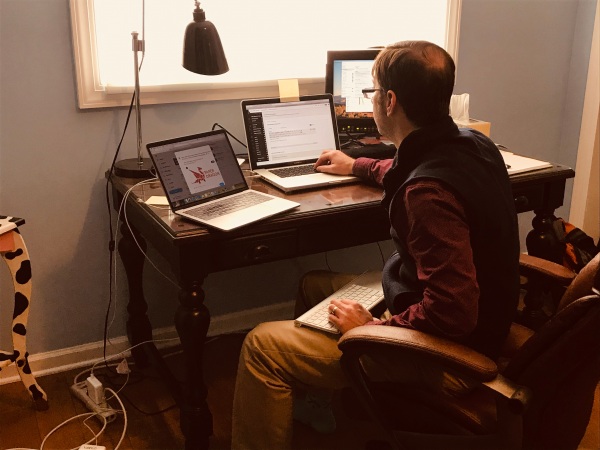
I’ve been busy. You might think that being stuck at home for two months would give me free time to blog. Not so.
Actual photo of me working, yesterday.
In addition to teaching and learning and writing a novel, I helped organize the website launch of Drexel University’s MFA in Creative Writing program literary journal.
Between all of that and some pandemic everyone keeps talking about, I haven’t really had time to advance my presidential campaign. You may think this is the point where I officially withdraw, but if you read my previous post… I was never officially running. I guess my point is, you won’t hear my stump speech any time in the near future.
Hopefully, we return to normal (or better) in the near future. In the meantime, I’ll see you online.
HBO recently released Craig Mazin’s miniseries Chernobyl. While nothing in this life is perfect, Chernobyl comes pretty darn close. From acting to directing to art direction to sound design, Chernobyl is a masterclass in filmmaking.
But the biggest story is probably the story itself. In the television world, screenwriters hold the creative power and, as writer and executive producer, Mazin made a variety of bold and effective decisions. For example, the explosion takes place in the first few minutes of the mini-series. He doesn’t make the audience sit through a lengthy first act or ordinary world, and it’s spectacularly powerful. But his reasoning behind the decision is what will really make things click for filmmakers.
In addition to the show, Mazin recorded a companion podcast with NPR host Peter Sagal to accompany each episode. In it, he explains his creative decisions. He shares insight about story structure, adapting true stories, portraying gore on screen, sound design, and even accents. It’s entertaining, engaging, and informative. It’s unfiltered information coming from a filmmaker at the top of his game.
Taken together, Chernobyl and the companion podcast are worth far more to aspiring filmmakers than anything you can find in a university catalogue. The podcast is free and HBO Now has a 7 day free trial. You have no excuses. If you want to learn about the craft of filmmaking, Chernobyl is a must.
A while back I wrote an article about “grips,” one of the first film credits the average movie goer puzzles over. But gripping isn’t my day job. I’m usually a video assist operator. Most people, even my coworkers, don’t really know what video assist entails. Well hold onto your BNC*, because you’re about to find out!
The Basics
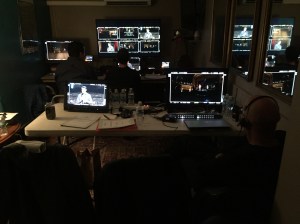
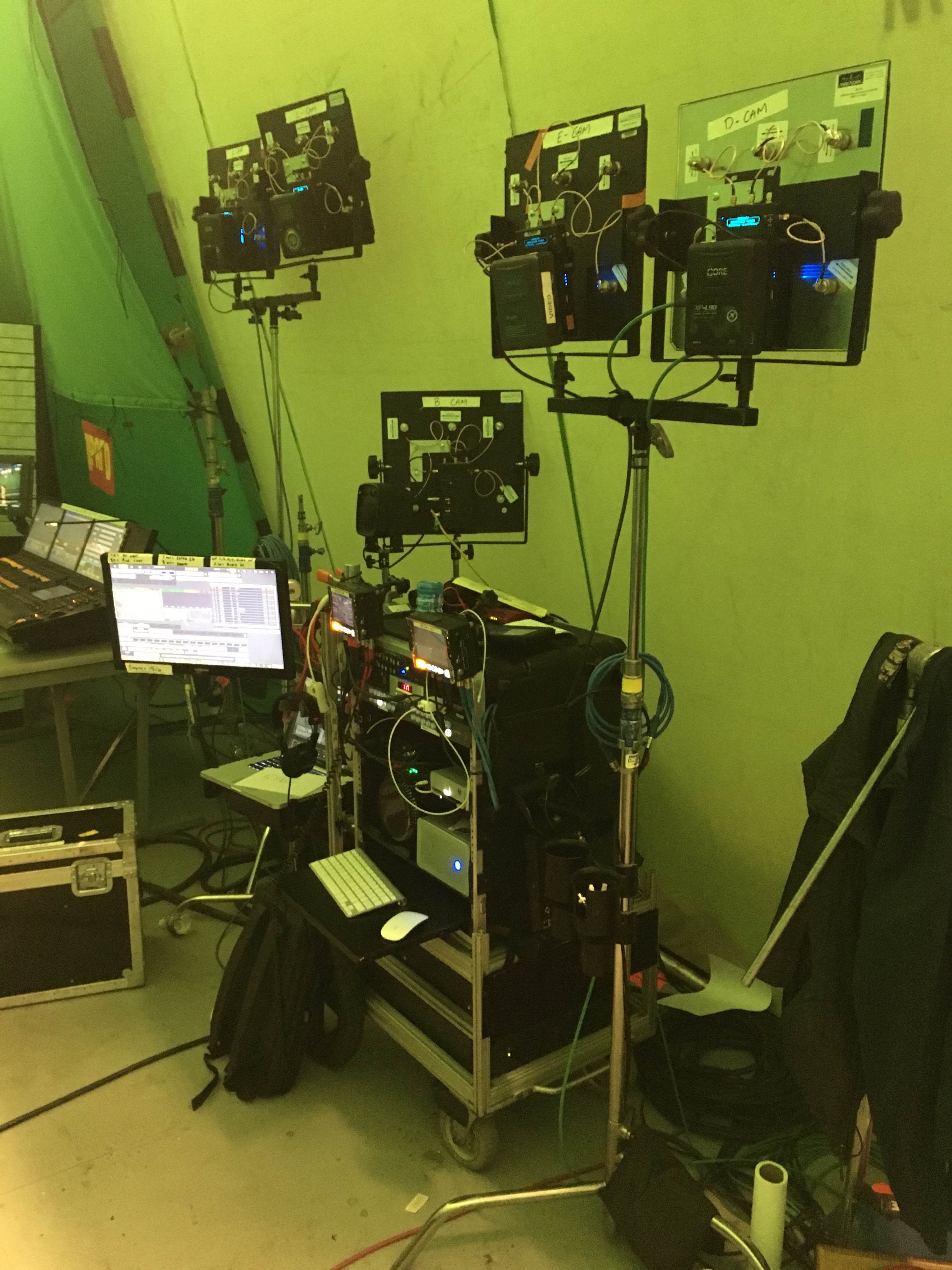
Do you ever watch the bonus features at the end of a movie and see the director watching a television monitor? That’s video assist. The video assist operator sets up that monitor. Pretty basic. More broadly, it’s the video assist operator’s job to get the image from every camera (no matter how many there are or where they are) to the director. In a nice, studio setting, it may look something like this.
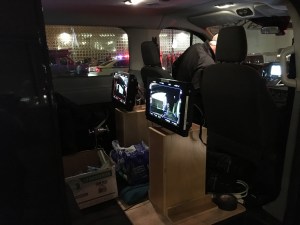
This is a control room we built for Comedy Central. On a stage, with one camera, this may be as simple as connecting the camera to a monitor (with some BNC). Things get a little more complex if you’re riding around the street at seventy miles an hour or if one of your cameras is in a helicopter. In those situations, we use transmitters to get the image from the camera to the director.
This is the “picture” car with the actors and camera. Our transmitter is on the roof.
This is the follow vehicle for the director and assistant cameramen.
And finally you have a follow van for the producers.
History
Once upon a time, we filmed on something called “film.” This was a roll of cellulose coated with a film of photo reactive chemicals that had to be developed before you could see what you shot. Each day, someone would run the film to a lab where it was developed. Then they would race back with “dailies” for the director and producer to review. It worked great for about 70 years.
But in the 1950s, television and video came onto the scene. Television captured images electronically and recorded them onto magnetic videotape so there was no need to “develop” film. Although the quality was far inferior to film, people could now watch what they filmed immediately after they filmed it.
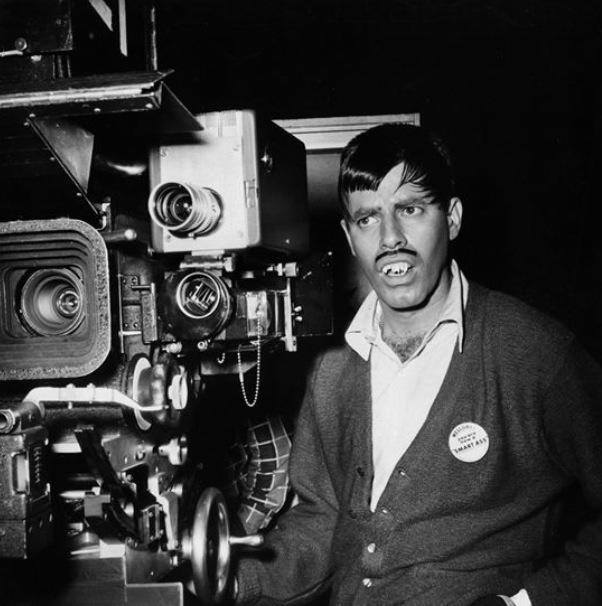
In 1960, Jerry Lewis used this new technology for his film The Bellboy. As both the director and the star, he couldn’t watch his own performance. He connected a video system to the film camera allowing him to instantly playback what was just recorded and make adjustments to his performance. This is generally considered the invention of video assist** and the first use of video playback.
In addition to getting the image to the director, the video assist operator records the action, allowing for immediate playback. This allows directors to re-watch takes without waiting for dailies. Directors may call for playback to check performances, look for continuity errors, see if a piece of gear was in the shot, check to make sure a stunt or effect worked, or watch something back in slow motion.
The video assist system is also used to record rehearsals. When we shot on film, this was a critical way to practice camera and actor movement without wasting thousands of feet of film. Today, most film production is done on digital video, but film crews still use rehearsals to practice shots before all of the lights, makeup, and effects are in their final places.
On a one-day shoot for a thirty-second commercial, playback may not be critical. But on something like a feature film that may take months and is generally not filmed in chronological order, playback can play a major role in keeping a film’s continuity. One intern I worked with said that video assist sounded like the film’s library. I kind of like that. (To be fair, the script supervisor is the film’s librarian, the video assist operator is the guy who has to go to the basement and find all of the old reference books…)
It’s important to point out that video assist is for reference only. When we shoot on film, the video feed or “tap” doesn’t have nearly the depth of field or exposure range of a piece of film. Video playback is not a completely accurate representation of what you filmed. In fact, oddly enough, video taps only record what isn’t on the film. The light entering the camera either exposes the film or goes to the video tap. Most things happen so quickly it doesn’t really matter. But several years ago, I was working with a producer to film gunshots for an action movie. When I played it back for him, he didn’t see the muzzle flash. I had to explain to him that was a good thing because it meant the muzzle flash was on the film. (Ugh. Tech talk.) And while that’s not the case with modern digital cameras, the video feed is a compressed version of what you’re actually recording. Much to the dismay of one producer whose intern deleted their favorite take, video assist operators do not record full resolution video files.
One other note is that for decades, video was recorded on tape. This led video assist operators to also be called video tape recorders or VTR. And while many ADs will still stay “let’s roll video” we moved on to computers about ten years ago.
Sync
In addition to the image, the video assist operator works with the sound department to get audio to the director. It’s critical to make sure all of the cameras and the audio are synchronized. Like watching a badly dubbed film, it’s disorienting and distracting to watch things out of sync.
This may sound like a simple thing, but let me give you an idea of what it’s worth to a production. A few years ago, shortly after we switched to high definition signals, quality, affordable transmitters were still in development. The transmitters we used, while great at long distances had a noticeable delay. (It takes some time to crunch down all of that video data, shoot it through the air, and unpack it back into an image.) This isn’t an issue if you’re filming across a football field. It is if you’re sitting ten feet from your actor and the actor on your television is moving noticeably slower. So after one frustrating day of filming on a new television show with transmitters that were less than a year old, our company shelled out $40,000 to upgrade to the latest transmitters.
Gak
Gak is a technical film term for stuff. And video assist operators have a lot of gak: monitors, switchers, speakers, cable, transmitters, hard drives, HDMI, BNC, barrels, patch bays, UPS’s, power conditioners, batteries, power cables (OSHA cords, P-Tap, Lemo, Hirose, 4-pin XLR), 3-pin XLR, mini XLR, intercoms, video printers, and on and on and on. Again, all of this is to get the image from the camera or cameras, synchronize it with the audio and give it back to the director for live viewing and playback.
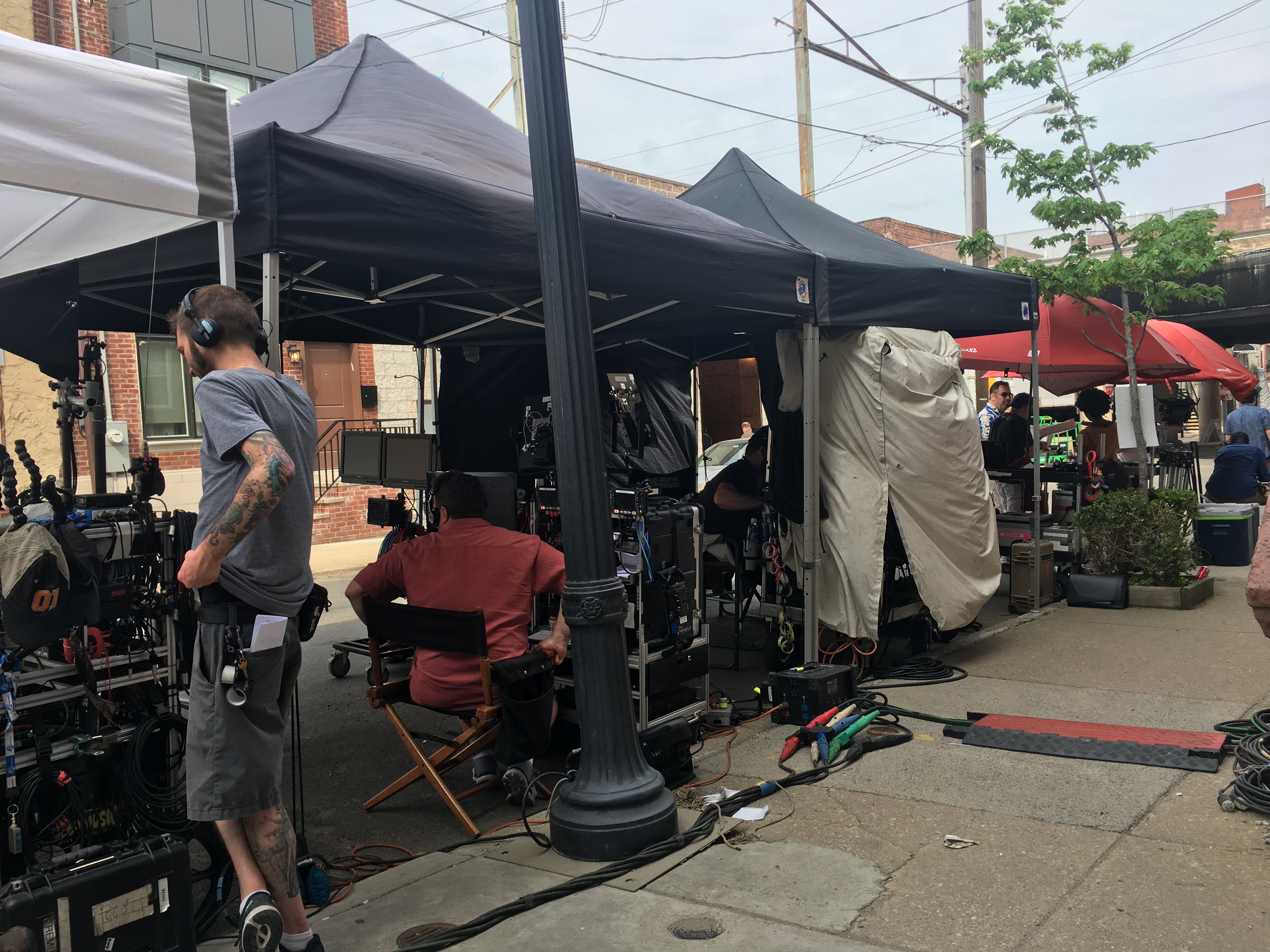
It’s a lot of techno-wizardry and it can be kind of mesmerizing. Maybe that’s why everyone likes to look over your shoulder. Or maybe they just like watching TV. Whatever the case, the video monitors always attract a crowd. The director, assistant director, and script supervisor are generally at the monitor. The producers will often get their own set of monitors. Then there are the hair, makeup, and costume people who need to be sure the actors look their best. And you’ve got the additional assistant directors cueing background actors, the electric and FX department standing by for cues, the humane society looking out for their four legged actors, and a couple of groupies for good measure.
And of course, all of these people need chairs and coolers and tents and heaters if it’s cold and, frankly, before you know it, you’ve got a regular village on your hands: a video village, which has become the industry term for, well this.
One of the biggest positives about video assist, however, is that you always want to be near the director. So if it’s raining, you’ll be dry. If it’s cold, you’ll be warm. If it’s warm, you’ll be cool. And you’re generally the first person to know if craft service is serving something better than hot dogs.
24 Frame Playback
Video assist operators have one more vital function that isn’t related to anything else I’ve mentioned so far. We are responsible for every “on-screen” video display. Every time you see a smart phone or a television or a computer monitor, a video operator has provided that image. Here are a few of the riveting images I’ve put on screens.
Amazing stuff, right? The video operator works in conjunction with the director, props department, and editor or visual effects department to make sure the right images get on the right monitors. Sometimes, that image doesn’t exist yet, so we just put green or grey screens on the monitors. That helps the VFX department create the image in post. Green makes it easier to remove the image. Grey allows light to fall on the set and actors like a real television.
Video assist operators need to be careful about what they put on screen. One of my coworkers was troubleshooting an issue with his personal phone and forgot to delete the number when we went to shoot. Months later when the DVD came out, he was inundated by calls from curious fans who wanted to know who Jason Statham called in the middle of the film
The name, “24 frame playback” comes from the fact that film cameras used to film 24 frames or individual pictures a second. Televisions, however, display 29.97 pictures a second. So for every 1 picture a film camera takes, a television displays 1 ¼ pictures. (Oh God. Math…) Because the television is projecting light, that means ¼ of the television screen will appear brighter than in every picture the film camera takes. That’s why in old movies, you will see television screens flickering in the background. To fix that, playback operators force the television to display images at 24 frames, not 30.
Modern TVs and flat screens like your phone don’t display images the same way older TVs did, so we don’t actually need to create a 24 frame video. That’s why it’s anachronistic to call it “24 frame playback” when it’s no longer 24 frames and playback actually has another meaning. Sheesh.
For some more information about how a television actually works, check out this fascinating video from The Slow Mo Guys.
Roll the Credits
There you have it. Another one of those hundreds of names that scroll by at the end of a movie explained. While it’s true that most of the work of the video assist operator doesn’t end up one screen, the movie – and filmmaking – wouldn’t be the same without them.
*BNC, the ubiquitous tool of the video assist operator, is a type of connector for video cables. BNC is also refers to the cable itself. Many people erroneously think it stands for “British Naval Connector,” a rather shoddy backronym for an American invention. It actually stands for “Bayonet Neill-Concelman,” the connecting mechanism and the name of its inventors.
You’ll read a lot of blogs and books about how to get representation as a screenwriter or how to get a script sold. But most of these present general guidelines or suggestions. I’d like to share my own experiences with one particular script, and the lessons I’ve learned along the way. My one caveat is that this is only one script from one person. How applicable will this be to you? I can’t say. But here’s my story…so far.
The Script
Photo by rawpixel.com on Pexels.com
I don’t recall exactly what instigated the idea, suffice it to say that everything kind of clicked. The script has a clear premise (housewife thinks mother-in-law is a serial killer), small cast, few locations, and it features several great roles for women—something Hollywood seems to be looking for right now. After receiving some good feedback on the first draft, I polished it up and took it to the next level.
The Budget
Photo by Pixabay on Pexels.com
I thought having a ballpark budget might be a good thing to know when pitching to producers. (I have subsequently learned they generally don’t care what you think a film would cost to make.) Since I’m friends with a number of production managers, I asked one to come up with a ballpark figure for me, and we landed at just under $1 million. Certainly a million dollars more than I have lying around, but not a high budget picture by any stretch of the imagination. She also pointed out that based on my cast of characters, my script would be eligible for certain breaks from SAG, the actor’s union. Armed with a script and some solid production information, I started talking to producers. This is where I learned the first big lesson.
A lot self help and motivational sources will tell you that when you undertake a new endeavor, you should be very vocal about it, telling your family, friends, and coworkers what you’re up to. The idea is that 1) it makes your endeavor more real, not just an idea. Telling everyone also creates peer pressure for you to follow through. 2) You never know who might take an interest in your endeavor and offer some advice or help. So I started talking about my script.
The first producer I mentioned it to (who did read it), said it was fantastic, I should frame it, hang it on a wall, and “forget it.” He had just finished a low budget feature and was currently being sued by the writer or director or someone and thought that it just wasn’t worth the headache.
The second producer I spoke to sounded very excited. I’d been working with him on commercials for years, and I knew that he produced ultra-low budget movies from time to time. He sounded very enthusiastic, told me to send the script to him, and said he’d be sure to get it in the hands of his director. I spoke to the director, too, and he also sounded interested. I have never seen or heard from either of them since. I did however hear that they’d apparently collaborated on another project recently. (Hopefully, it wasn’t a rip off of my script, but time will tell…)
Then I reached out to a friend of a friend of a friend who’d just written and produced his first film. He was nice enough to call me back and have a lengthy and informative conversation, wherein he also told me it wasn’t worth the headache. More importantly, he said I was looking at the budget completely wrong. The problem is, an ultra-low budget film isn’t expected to make back very much money, so producers and investors generally avoid them. Ultra-low budget films tend to get made by maxing out credit cards, mortgaging the house, or schmoozing a rich uncle. Otherwise, you want to look at the $6-10 million range. Still low budget for sure, but you either need enough money to hire A-list talent or have the script (or chutzpah) to convince people to shell out several million dollars for your idea. This brings me to the second big lesson.
Pre-Sell
Photo by Burst on Pexels.com
Everybody hates risk. And in the extremely speculative world of filmmaking producers and investors mitigate risk by making sure a script is “pre-sold,” that is, they can guarantee a certain number of tickets will be sold. Projects can be pre-sold in a variety of ways. Star power is the most obvious. Throw an A-list celebrity on screen and you can (almost) guarantee a certain number of tickets. Intellectual property (IP), is one of the most popular things right now. If you can say Ironman comics or The Girl on the Train have sold X number of copies, you can be fairly certain your movie will sell Y number of tickets.
The thing that surprised me with IP as I continued to have conversations with producers was how little success you needed to show. Granted, they’d prefer to buy a New York Times bestselling novel, but I definitely saw a producer’s eyes go green when a fellow screenwriter mentioned that she’d sold a few thousand copies of her vampire erotica.
Another bizarre pre-sell that’s cropped up is large social media followings. Did your short film get a million hits? Do you have a hundred thousand Instagram followers? Is your fake Twitter account for an anthropomorphized self-driving car constantly trending? Maybe it needs it own movie.
Foreign markets are another major pre-sell. The rest of the world likes American movies and they often make more money overseas. That’s even (or especially?) true for movies that aren’t blockbusters. For some reason, China loves investing in American films. And as they say, a billion times anything is a big number. As long as your film has something to do with China, has a Chinese character, doesn’t malign communism, and doesn’t include time travel (yes, that is real caveat), you might be able to convince a producer that your script is worth a boatload of yuan (tariffs notwithstanding). That is, as long as it’s not a comedy. Which brings me to the next big lesson.
Don’t Write a Comedy Feature
Photo by Gratisography on Pexels.com
Comedy doesn’t translate well. There’s a great documentary called Exporting Raymond where Ray Romano tries (with much struggle and hilarity) to produce Everybody Loves Raymond in Russia. But he had a major issue initially getting the Russians to accept the overall comedic tone of the show. In the movie, Romano explains why simple, stupid pop songs like Brittany Spears do so well overseas. It’s pretty straightforward to translate, “Oops, I did it again. I played with your heart, got lost in the game. Oh baby, baby.” Clever wordplay and cultural jokes don’t travel well. (Consider this anecdote about American football. On a film set, if there’s a mistake that requires another take, the assistant director will often say, “Flag on the play,” a reference most Americans will understand.
A friend of mine was working on a Bollywood film and every time he said “flag on the play,” the grip department thought there was an actual flag—a piece of grip equipment—left in the shot. How’s that for comedy?)
So if you’ve written a comedy, you’ve just cut off a big part of your pre-sold tickets. Not good.
The other problem is that even if a producer thinks you’re funny, producers are usually weird people. Successful producers like to keep the world at arm’s length or do drugs… or both. In any event, even if they like something they can be sure if the hoi polloi will like it. “How will it play in Peoria?” as they like to say. That gives you the opportunity to launch your (semi) successful standup or improv career into a script sale (a phenomenon you may have noticed). But if you, like me, don’t have that track record, producers will hesitant to take a chance on your script.
Give TV a Whirl!
Photo by Rene Asmussen on Pexels.com
One producer was nice enough to point out to me that television might be worth a try. For one thing, we’re in the platinum age of TV. For another, there’s far more work for writers in TV. Each show has a staff, as compared to the single writer for a feature. A “season” of TV (now often down to ten or thirteen shows), is also much cheaper than a feature film. Both of these are ways producers can mitigate risk on their investments. Which means TV is a great opportunity for new writers and comedy writers… assuming you live in LA.
I should also point out that as a new writer, it’s very unlikely you’ll be the showrunner of your own pilot. Producers are unlikely to pick up a pilot from an unknown writer because they have no idea if the concept has “legs,” if it will keep going for season after season. If it really is that great of a concept, they may try to produce the show, but they’ll almost certainly bring on a more experienced writer to run it. (Ironically, you need a pilot in order to land that first gig, even if it’s just getting coffee.)
That was something to chew over, and brought me to my final big lesson.
Branding
Producers (and agents and people in general) are very easily confused. If you pitch them a comedy feature, and they ask what else you’ve written, don’t say a horror television pilot. Their brains will explode. One of the difficulties all writers face is finding their voice. So even though you’ve only ever written hardcore slasher films, you may have a fantastic idea for a rom-com that just won’t leave you alone. And why not give it a try? Maybe you have a knack for it. Fine. Just don’t mention it in a general meeting!
It gets a little weird because I’m the first to acknowledge that people can be talented in many things and if you’re an adept writer, you should be able to shift gears to a new genre at least passably. In any event, it’s not recommended. I suppose that’s why writers have nom de plumes. (And yes, famous directors and writers can get away with hopping to new genres, but they’ve already proven that they know what they’re doing.)
One producer did, however, bring up an interesting strategy. So many middle of the road, mediocre movies are made for TV all of the time, you could probably use your slasher or raunchy comedy sensibilities to spice up something that would otherwise be a totally forgettable movie of the week.
Where’s that Leave Me?
Still writing (a good place to be for a writer, though never high paying enough). I still have my script, and I’m still pitching it to producers. Knowing what I know now, I probably wouldn’t have started out of the gate with this one. If you aren’t anchored in place and want to be a screenwriter, I would recommend moving to LA and lookong into TV.
If not, dramas based on intellectual property (true stories, public domain, folktales, that weird fan fiction your college roommate writes) might be your best bet. But one recurring theme I’d heard in my quest was, always pursue what you’re passionate about. That won’t guarantee anything about ever seeing it made, but at least you can enjoy it for the time (likely years) you’ll be working on it. I’ve also stumbled upon a handful of websites that screenwriters may find interesting.
The Black List makes your script available to producers, agents, and anyone else who pays to get on their site. It offers affordable coverage. Scripts that are well reviewed and build a buzz are published each year on an actual black list: a list of all the great scripts that weren’t produced in the past year. Before you think this is your answer to getting noticed by Hollywood, I should mention that one producer told me, “The Black List is huge.” So you may get noticed, but it’s also very likely, you will be lost in a sea of mediocre scripts.
I’ll be honest. I’m not a fan of IMDB as a professional resource. Their “verification” process is weak and opaque. (I’ve been in a production office with a producer screaming at them because they listed private, inaccurate information about a film that was in pre-production.) They also don’t seem to understand actual film crew categories. (There’s no such thing as a “camera/electrical” department and video assist is decidedly neither of those!)
But IMDB Pro can be helpful. It is a subscription service, although you don’t need any professional credentials to join. (Another bizarre feature.) In any event, it’s a good resource to see who represents whom, who owns or works for what company, and what films are in production. Useful data as you target your pitch.
Ink Tip is a kind of classifieds section for scripts. You can list your script for sale or you can browse what producers are looking for. You can also sign up for a free weekly e-mail that gives you access to 2 leads…for free. I have had some “success” connecting with producers through Ink Tip.
Many script services focus on perfecting your craft and tightening up your script. Roadmap Writer’s does that, but their bigger asset is connecting you with agents, managers, and producers. There are webinars, general meetings, and pitch sessions for you to learn about the business side of the industry. And remember, these are working professionals (not script gurus or professors). They can tell you, specifically, why they would never produce your script. Or, on the other hand, if they really like it, they may just add you to their rolodex. As of this writing, 51 screenwriters have gained representation through Roadmap Writers.
I’ll be honest. I haven’t really used Stage 32. It seems to be a kind of Facebook/LinkedIn for filmmakers. But like Roadmap Writers, they also offer pitch sessions, often with the same producers, agents, and managers. From that perspective, it’s another good opportunity to get face time with the very people your’e trying to reach.
This is a great site for following the news in Hollywood. Like IMDB Pro, you can use this to research scripts that are selling and, more importantly, who’s buying them. If you live in LA, they also have a jobs section (although it’s more for assistants than writers).
As a work of fiction, even the most “realistic” screenplay will have some made-up elements. But there’s a bigger question about how to make aliens or time travel or ghosts “believable.” That’s where we get into “story reality.” What is the reality of this world you have created?
A lot of this has to do with how your characters react to the situations you put them in. If you walk down the street this afternoon and come across someone bleeding to death, how would you react? Call the police? Call an ambulance? Vomit and run away? Now what if you were walking down a beach in Normandy on June 6, 1944? You may vomit and run away, but you might also pull out a machine gun and start shooting Germans. Not a great option in the first example, but perfectly understandable in the second.
The problem is, if you create a fantasy world like Hogwarts or the Shire or Tatooine, your audience can only accept the “reality” of your story based upon how your characters act and react. Apparently, cutting off someone’s arm with a laser sword isn’t a very big deal in the Star Wars cantina. It may, however, be frowned upon at lunch in Hogwarts. Whichever the case, your characters need to react consistently to the “reality” that you have created.
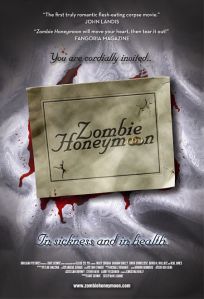
That brings me to Zombie Honeymoon. I can’t necessarily recommend that you watch this movie. I watched it because seeing what doesn’t work can often inform you on what does work. Zombie Honeymoon (hilarious premise) was in many ways a hilarious movie. Newly married husband suddenly becomes a zombie and his wife struggles with the “reality” of that situation. The problem was, she had a very different view of “reality” than everyone else in the script.
The guy at the video store freaks out when he sees the zombie. The local cop is out looking for missing persons. And the best friend runs away when she realizes the husband is “undead.” It’s a consistent reality that aligns with our own reality. But the newlywed wife decides that she’s going to see her husband’s zombification through much as though he had been diagnosed with cancer or Alzheimer’s.
The thing to remember here is that by forty minutes into the movie, her husband has already killed half a dozen people. So instead of marrying Augustus Waters (The Fault in our Stars), she’s really married Michael Corleone (The Godfather).
The premise could still be resuscitated as a farce as the wife hides one body after another and tries to tape her husband’s ears back on for their double date, but it doesn’t. The new wife agonizes over “what to do,” leading to some decent performances and genuinely uncomfortable scenes as she hugs her decomposing husband. But her disregard for everyone else who’s died (including her best friend) and her casual acceptance that her husband is in fact a brain eating, murderous, animated corpse create a disjointed world that doesn’t follow the rules of its own “reality.” It was almost as though everyone else was hired for a horror movie and someone told her it was a Lifetime movie of the week.
Suffice it to say, a consistent “reality” is critical even if your script is reanimating corpses. For more thoughts on story reality and credibility in screenplays, check out these links.
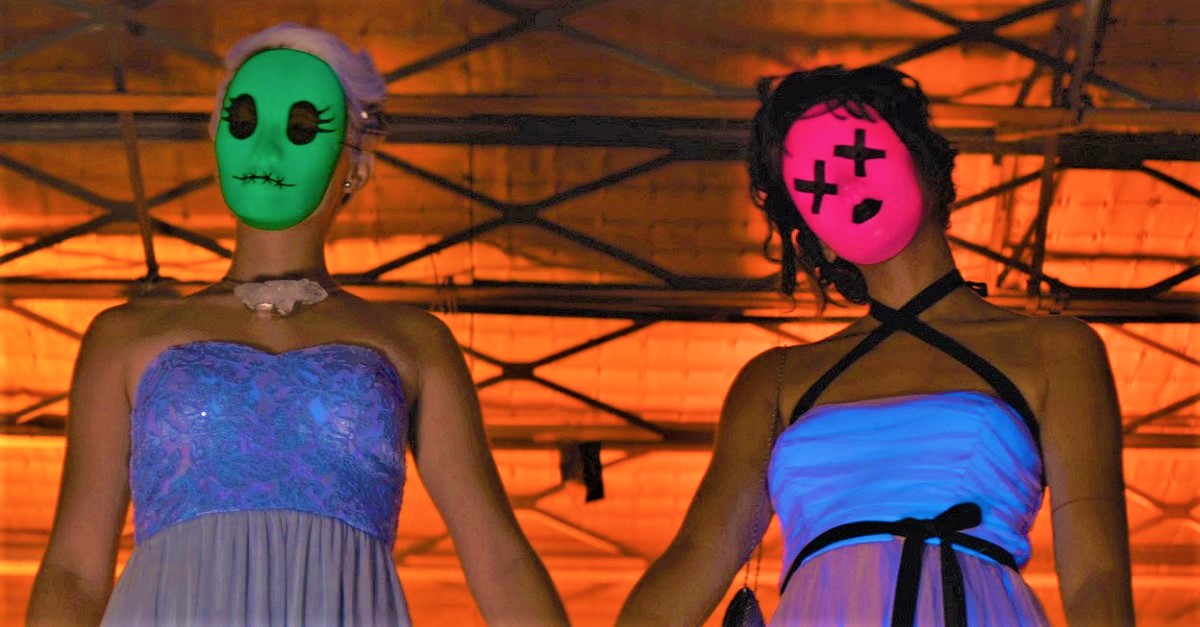
With the Oscars this week, you’re probably scrambling to watch all of the films you’ve head about but haven’t seen. One little nugget that flew under the radar last year was Tragedy Girls. I only learned about it through the Queens of Crime podcast. (Highly recommended if you like true crime stories.) I enjoyed it for all of the reasons I thought I would: a ridiculous premise (high schoolers become murderers to publicize their blog), campy humor, ridiculous gore, and surprisingly high production value. The acting was spot on and the cinematography was creative and effective.
All that being said, there’s a reason this film flew under the radar, and it can be a lesson for the aspiring filmmaker. Tragedy Girls disregards many of the “rules” of screenwriting, and it shows. It wasn’t bad enough to be a B movie, but it wasn’t likable enough to be mainstream. The biggest thing I felt while watching it was discomfort. And here’s why.
Does your protagonist need to be likable?
No. But they do need to be relatable. The main characters, Sadie and McKayla, are snotty, narcissistic teens who are obsessed with social media. And while they can be funny, they aren’t likable. Nobody is rooting for them to succeed. The film never builds a bridge between these antiheroes and the audience. There is no “save the cat” moment or humanization of these sociopathic killers.
The film could have humanized them in a variety of ways. It could have better explained why they were killers (bullying? revenge?), given them their comeuppance in the end, or given them an opportunity to make amends for what they did. It also could have made their victims more despicable, turning Sadie and McKayla into the lesser of several evils (think of Dexter). But for some reason, everyone else in Tragedy Girls, is strangely guiltless and generally likable.
The Three Act Structure
Tragedy Girls disregards the three act structure, starting with Sadie and McKayla committing their first murder and capturing (and torturing) a serial killer. While it does get things moving quickly, it raises more questions than it answers. Who are these girls? What is their ordinary world? Why do they believe they are morally justified in killing people? Why is social media so important to them? Why do they want to be notorious killers? Answering even one of these questions would help endear them to the audience which is, after all, the primary function of the first act.
From there, the girls spiral into their killing spree–a kind of Mean Girls but with murder. And while it does have its comedic moments, that’s sort of it for the rest of the film. If you don’t find that entertaining, the film has lost you twenty minutes in.
The final act offers no real resolution or change. Sadie and McKayla are essentially the same on minute 1 and minute 91, giving the impression of a drawn out SNL sketch rather than a feature film.
Too Close to Home
When you strip away the jokes, you end up with a movie about two teens who kill their classmates and get away with it. The film offers no real alternative to the outcome, and it isn’t really a cautionary tale. If, for some perverse reason, you end up rooting for Sadie and McKayla, you end up rooting for high school murderers.
That really brings me full circle to discomfort. At every point in the movie, you’re not 100% sure if you should be laughing, cheering, or vomiting in disgust. I do have to tip my hat to the filmmakers because, production-wise, it’s very well put together. They also stick to their guns. They made a movie about unabashed serial killers who get away with their crimes. They bucked convention. As to whether or not it worked, you’ll have to judge for yourself. But as you build our own stories and craft your own characters, it’s important to keep in mind how some of these “rules” operate in screenplays and the reaction an audience can have if you disregard them.
If you didn’t get enough of it last time, here are some more fun facts about copyrights! For example, did you know that like being a Scientologist or owning a gun, copyright is protected under the United States Constitution (Article 1 Section 8)? Or that Walt Disney successfully lobbied to extend copyright protections to their current length in order to preserve its copyright on Mickey Mouse. Seriously, you can’t make this stuff up.
Copyrights Never Die. They Just Pass into Public Domain
Seventy years after you die, all of your work will pass into the public domain or PD as they say. Public Domain means we the people now own your work and can do whatever we want with it for free. This is great for filmmakers who want to do a spinoff sequel to Hamlet or use Beethoven’s Moonlight Sonata in their soundtrack. But be forewarned, while Beethoven’s music is PD, specific recordings of the Moonlight Sonata are copyrighted by the person who recorded them. You’ll have to make your own recording of Beethoven’s music.
Interestingly, too, while you can make an adaptation or derivative work from something in the public domain, you can’t use any elements from other derivative works that are still copyrighted. The Wizard of Oz is a great case study. The original L. Frank Baum works are public domain, but the 1939 Warner Bros. movie is not. What’s the difference? For one thing, L. Frank Baum does not describe the Wicked Witch of the West as green. So when Disney made its Oz the Great and Powerful a few years ago, they had to be careful not to use Warner Brothers copyrighted shade of green. Read more about The Wizard of Oz copyright here.
(Sidebar, my first job in television was securing music rights for a high school band concert. We needed separate rights to broadcast the music and rights to synchronize the music to the televised concert.)
Fair Use
Fair use allows you to use part of copyrighted works for specific, limited purposes. Courts generally consider four criteria in fair use litigation.
1) Nature of the use. Educational and informational purposes are generally permitted while commercial purposes are generally not. Since I run a free, educational blog, I’m not too concerned about including a copyrighted image in a post to help illustrate a point. (That being said, if you own the copyright and were not credited or don’t want to be associated with my blog, I’ll gladly remedy the situation.)
2) Nature of the copyrighted work. While audio and video recordings may be copyrighted, audio and video recordings of newsworthy events (facts), may not be copyrighted. Time magazine, for example, tried to purchase the rights to the Zapruder film–the assassination of President Kennedy. But as a matter of fact and public record, the court decided the film should be in the public domain.
3) Amount of the copyrighted work. Screening the first scene of Saving Private Ryan to educate film students on a particular cinematography technique is probably okay. Screening all of Saving Private Ryan to a packed theater, not so much.
4) Damages. Of course, all of this comes down to money. If you start selling pirated Game of Thrones DVDs or Game of Thrones themed T-shirts, you’re taking money out of HBO’s pocket. But if you reprint a promotional picture for educational or news stories, you’re probably okay.
4B) Parody. But wait there’s more! One dicey way that you can ride off of the success of copyrighted work is parody. That’s how we end up with all of those porn parody gems. The key here is that your new copyrighted work is parodying a specific other work, but not infringing on the same market. That is to say, people who want to watch the adventures of Jack Sparrow will not intentionally purchase Pirates XXX.
Intellectual property rights are largely covered in three categories: copyrights, trademarks (which I mentioned briefly in the previous post), and patents. Patents are distinct from copyrights in that copyrights protect “fixed works of authorship.” Patents protect processes. If you make the world’s first 5D film, you can copyright the film. But you’ll want to patent the process for making all future 5D films.
Copywriting
Copywriting is different than copyrighting. Writers may work on copy (text) for advertisements or articles. That’s called writing copy. And while copywriting may be copyrighted, make sure you’re using the right copy when writing copy about copyrights.
More fun with copyrights
Phew! That was exhausting. But the fun’s not over. www.copyright.gov actually does a really good job explaining copyrights. I highly recommend checking it out if you have questions. In the mean time, get out there all of you creative people and fix some original work in a tangible form!






















 Vargoing